
Empowering Radical Cross-Coupling Chemistry through AI-Driven Retrosynthesis and Real-World Validation.
Introduction
Over recent decades, synthetic chemists have extended the horizons of molecule-making with increasingly powerful cross-coupling reactions, while cheminformatics and machine-learning scientists have built AI systems to automate and optimize synthetic planning. These two streams, one rooted in reagents and catalysis, the other in data and retrosynthetic logic, have long advanced in parallel, each reshaping modern synthesis from its own direction.
In this post, we explore how radical cross-coupling chemistry and AI-driven retrosynthesis are converging at this frontier: how ChemAIRS®, Chemical.AI’s retrosynthesis platform, can recognize and recommend radical routes with expert-level intuition, and how new hydrazide-based redox-free couplings are making these once-specialized reactions as straightforward as a Suzuki.
1. The Rise of Radical Cross-Coupling: A New Logic for Synthesis
As drug discovery increasingly moves toward 3D, sp³-rich scaffolds, medicinal chemists are being asked to make more structurally complex molecules than ever before. But while planar carbon scaffolds can be assembled quickly through Suzuki and analogous cross-couplings, these conventional two-electron methods (i.e. polar approaches) struggle when it comes to attaching alkyl fragments.
Once the handle turns alkyl, the power of modular cross-coupling fades — and suddenly, the synthesis becomes a grind. Chemists are pushed back to a small toolbox of classic C–C bond-forming reactions like Wittig or alkylation of activated methylenes, each requiring functional-group (FG) and protecting-group (PG) manipulations to set the stage. The step-count increases and the disconnections become less intuitive, and one starts wondering if it is really worthwhile to do all the hard work for just making a single C–C bond. After all, in the traditional “polar” playbook, carbanions and carbocations are finicky species—powerful but hard to tame (Figure 1).
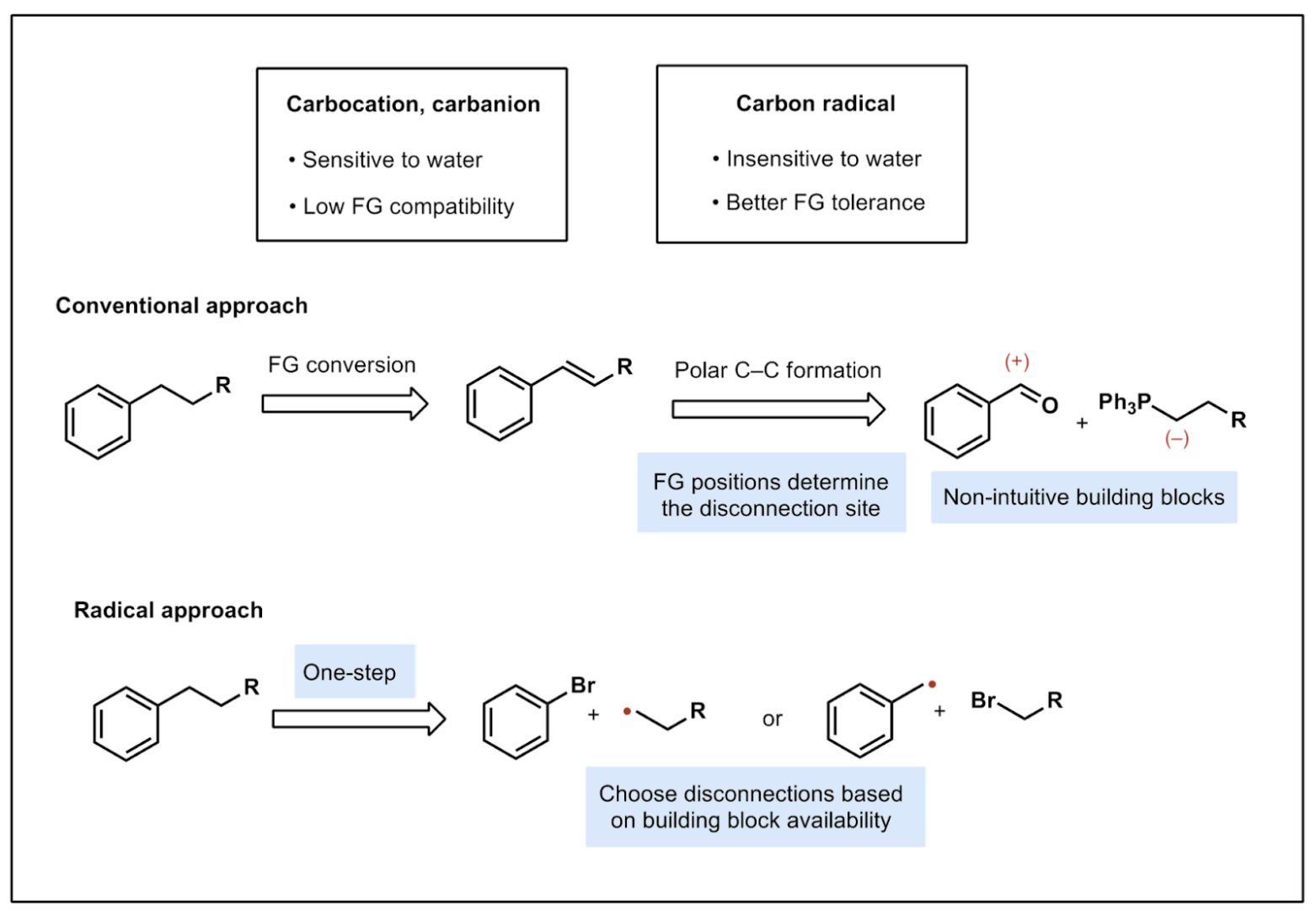
Figure 1. Conventional Polar Cross-Coupling versus Radical Cross-Coupling Approaches
Radical cross-coupling (RCC) changes the logic of bond construction entirely. Rather than relying on charged carbanions or carbocations, RCC proceeds through at least one neutral radical intermediate, typically under mild, transition-metal-catalyzed conditions — most famously using nickel. This paradigm shift has rapidly transformed RCC into a robust and general synthetic tool, particularly powerful for installing alkyl fragments and constructing 3D, drug-like molecules.
Compared to conventional polar approaches, RCC offers three practical advantages:
Flexible disconnections — radicals can be generated at many positions, letting chemists choose the most convenient starting material.
Functional-group tolerance — radicals coexist peacefully with groups that are not compatible with carbanion or carbocation (hydroxy, ester, carboxylic acid, ketone, even free amines), dramatically reducing PG manipulations.
Common precursors — radicals can arise from everyday functional groups such as carboxylic acids, alcohols, amines, or alkenes, making precursor preparation straightforward.
Collectively, these features make retrosynthetic planning more intuitive, and overall routes become shorter and cleaner. RCC doesn’t replace traditional 2e⁻ couplings, it complements them, giving medicinal chemists a new, reliable way to explore alkyl space and simplify synthesis in the era of 3D drug design.
2. Does AI Already Know About Cutting-Edge Chemistry Radical Cross-Coupling Reactions?
Yes, ChemAIRS Does.
The design of efficient synthetic routes has always been the heart of chemistry. Since E. J. Corey formalized retrosynthetic analysis in the 1960s, chemists have planned molecules by mentally working backwards, dissecting a complex target into simpler building blocks through a combination of intuition, experience, and chemical logic.
In recent years, artificial intelligence has begun to learn this logic for itself. Modern AI-driven retrosynthesis platforms use deep learning, graph neural networks, and hybrid rule-based models to predict viable disconnections, propose reagents and conditions, and evaluate route feasibility — tasks that once depended entirely on human expertise.
Among these systems, ChemAIRS® (Chemical.AI) stands out for integrating multiple layers of chemical reasoning. Its algorithms combine data-driven learning with expert-encoded rules to generate complete retrosynthetic routes, evaluate process parameters (cost, scale-up, impurity profiles, and safety), and suggest experimental conditions, turning what used to take days of manual planning into minutes of interactive exploration.
2.1 Testing ChemAIRS Retrosynthesis on “Radical Logic”
The real question is: Can AI grasp this new single-electron logic? Can an algorithm recognize when a radical disconnection is the better move?
To find out, ChemAIRS was challenged with a set of radical cross-coupling (RCC) case studies pioneered and refined by the Baran group, including those reported in the 2022 JACS (Vol. 144, 17709–17720) and 2024 Science (386, 1421–1427) publications, along with an additional molecule not previously prepared via RCC. The aim was to see whether the AI could independently identify and recommend efficient, innovative RCC disconnections during retrosynthetic planning for both established RCC targets and molecules lacking prior RCC precedent.
2.1.1. Canonical Radical Cross-Coupling Reaction (Baran 2022 JACS)
To begin, we selected representative example from Baran’s 2022 publication in the Journal of the American Chemical Society (144, 17709–17720), which showcased Ag–Ni electrocatalytic decarboxylative cross-coupling (DCC) for constructing diverse medicinally relevant motifs.
Case Study 1. For the pyrazole–cyclohexanone derivative (1), the Baran group developed a direct synthesis from a cyclohexanone-derived redox-active ester (3) and an iodopyrazole (4), yielding 31 % — far outperforming the classical Suzuki–hydrogenation sequence, which required multiple protecting-group manipulations and three Pd catalysts. ChemAIRS independently proposed this efficient Baran group approach as the optimal route and ranked the RCC-based strategy among the most feasible pathways during retrosynthetic evaluation (Figure 2).
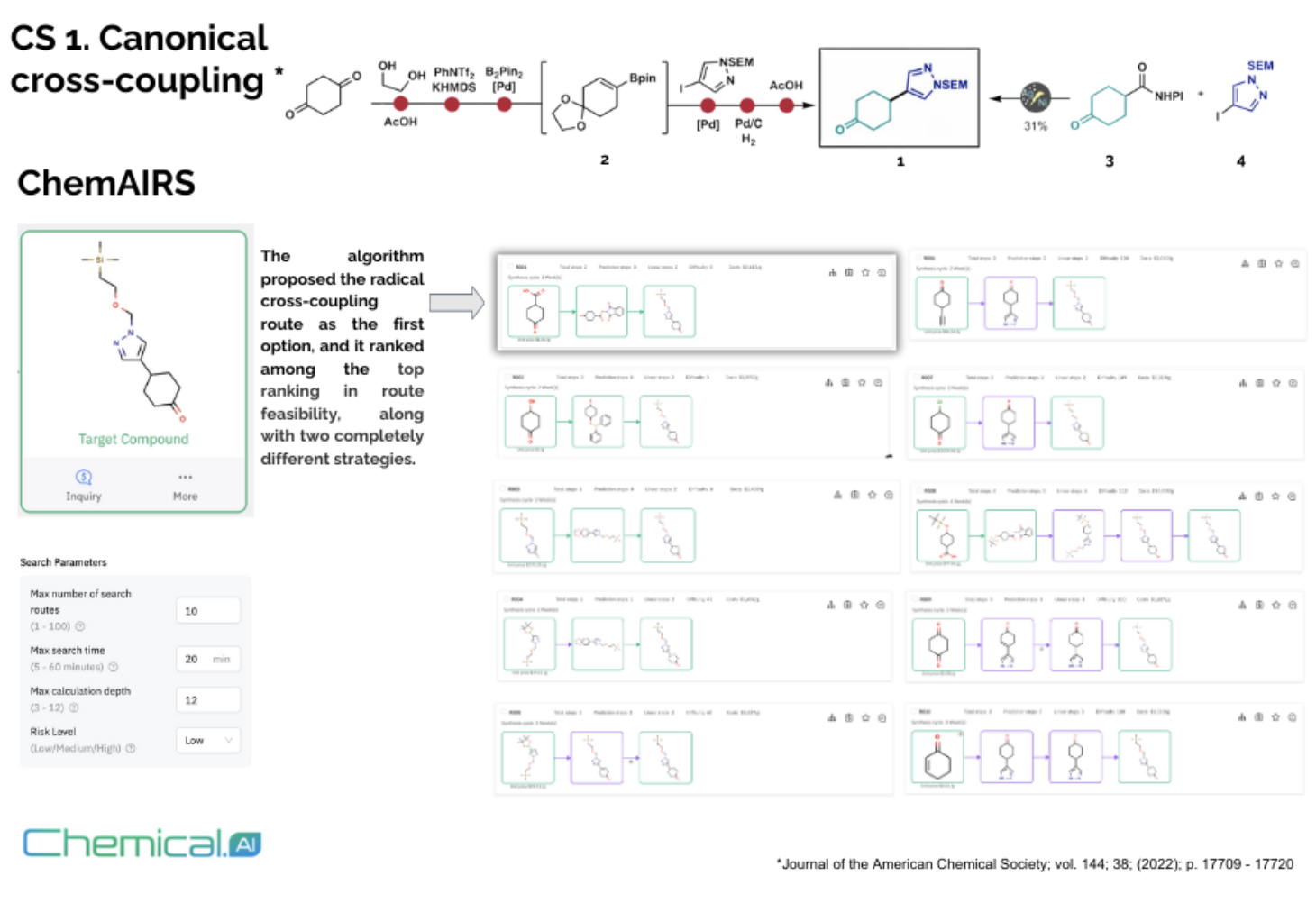
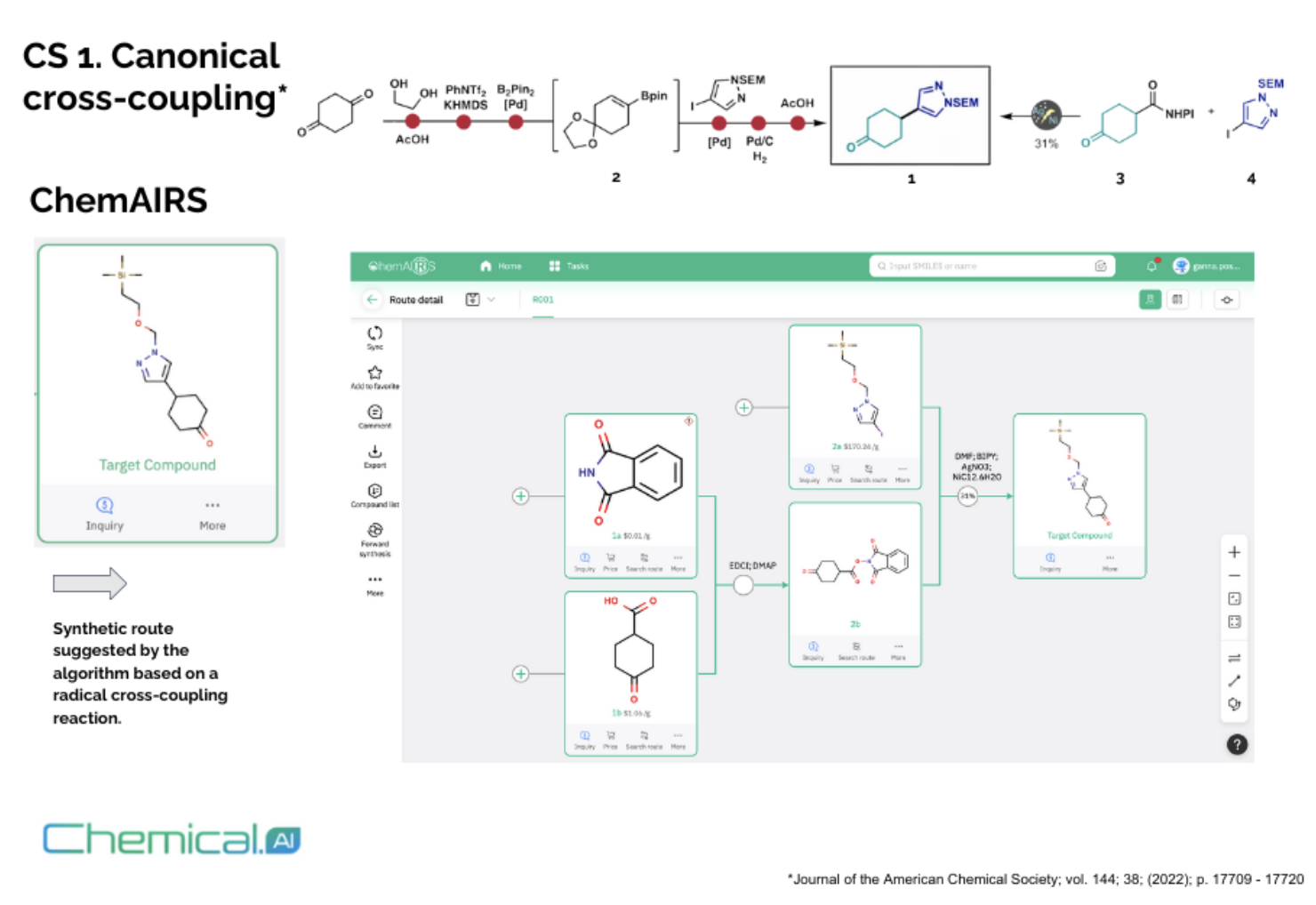
Figure 2. Case study 1: Canonical cross-coupling
2.1.2. Two-Step Enzymatic Oxidation and Radical Cross-Coupling (Baran 2024 Science)
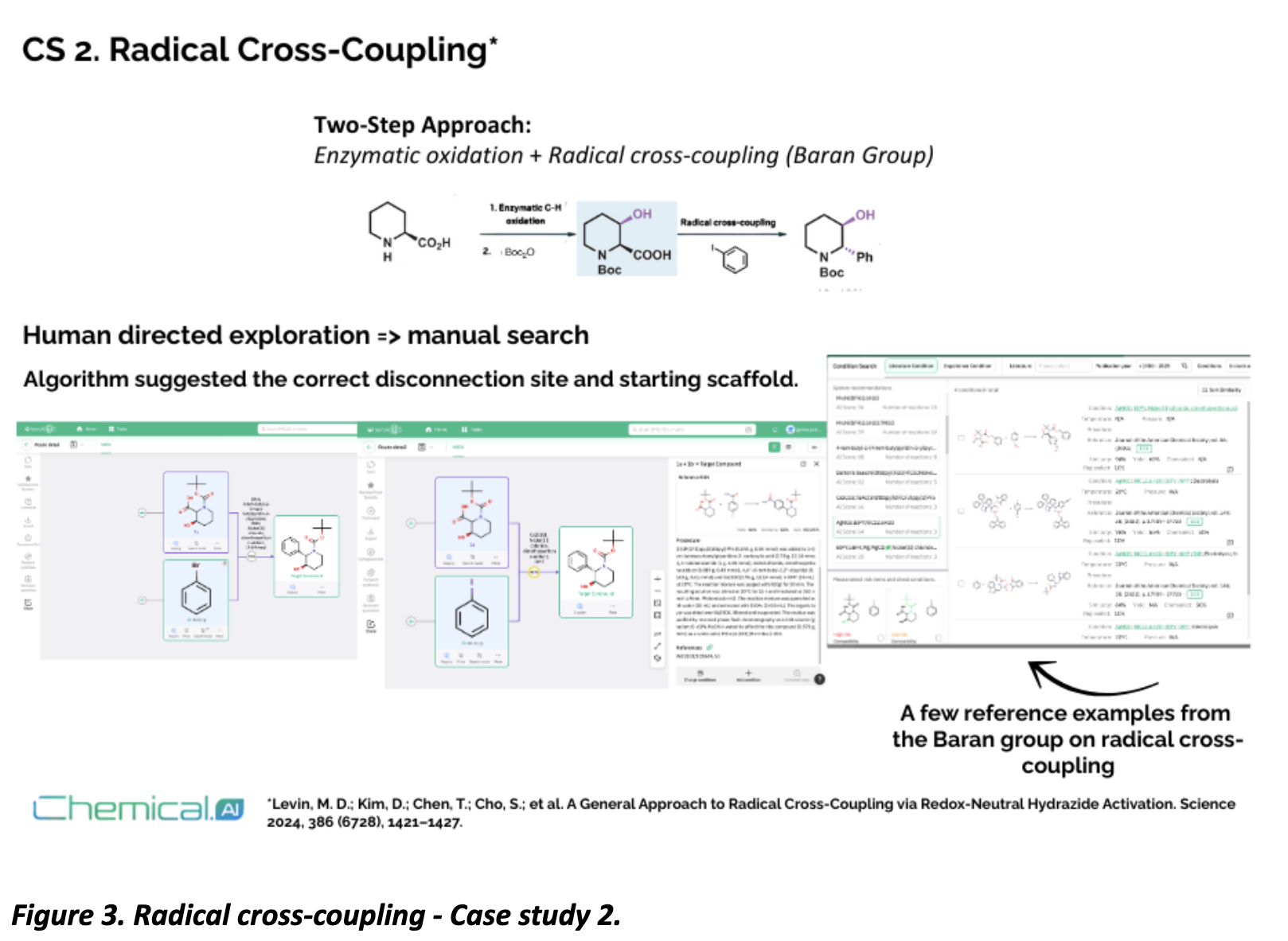
Case Study 2: A second test case was derived from Baran’s 2024 Science publication (Science, 386(6728), 1421–1427), which describes a two-step approach for making substituted piperidines combining enzymatic oxidation and radical cross-coupling.
By focusing on a radical cross-coupling transformation, we tested whether the ChemAIRS retrosynthetic module could independently recognize the efficient and innovative route originally proposed by the Baran lab. When ChemAIRS was run in automated mode, it initially proposed more conventional, piperidine-forming routes, centered on piperidine ring construction rather than substitution-based routes utilizing radical cross-coupling.
However, when manual human guidance was applied to the retrosynthetic search, ChemAIRS correctly identified the optimal disconnection site and starting scaffold. While many of the conditions it suggested involved photochemical or electrochemical setups, aligning with contemporary RCC methodologies, the algorithm also referenced known radical cross-coupling examples from the Baran group, indicating strong awareness of modern synthetic precedent (Figure 3).
2.1.3. RCC Exploration Without Precedent
Case Study 3: The third case study centred on a derivative of homophenylalanine (compound 5), a non-proteinogenic amino acid which serves as important chiral building blocks in drug synthesis, for example in antineoplastic agents such as Carfilzomib and in angiotensin-converting enzyme (ACE) inhibitors.
Although various synthetic strategies have been reported for homophenylalanine derivatives, including transamination, decarboxylation, and cyclization approaches, no RCC-based route has been described for compound 5. This makes it an especially informative case study for evaluating the RCC capabilities of ChemAIRS.
When ChemAIRS was run in automated mode, it rapidly proposed a wide range of synthetic pathways, with RCC-based strategies prominently occupying five of the top-ranked positions, reflecting the best balance among parameters such as difficulty, cost, total, linear, and prediction steps (Figure 4).
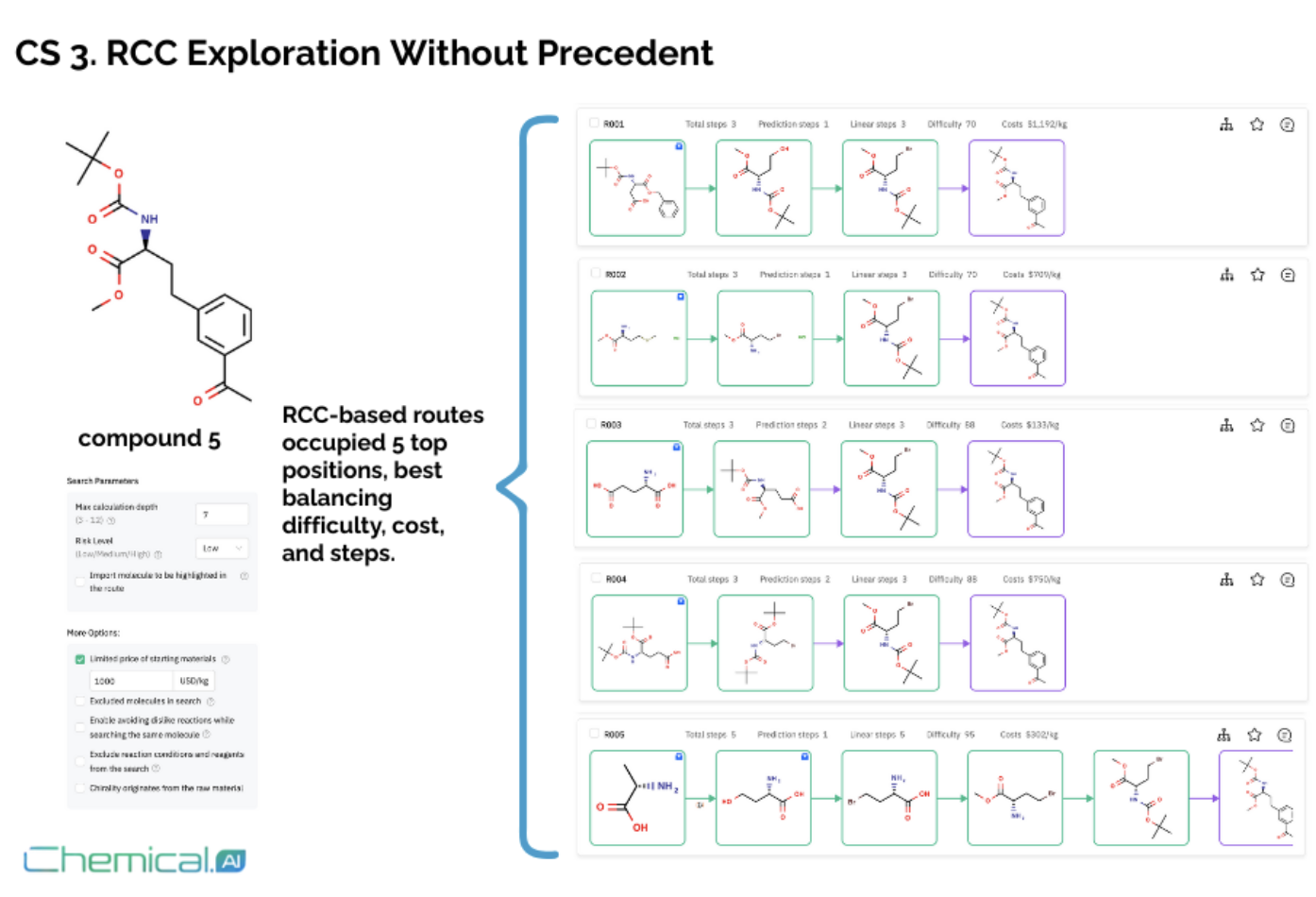
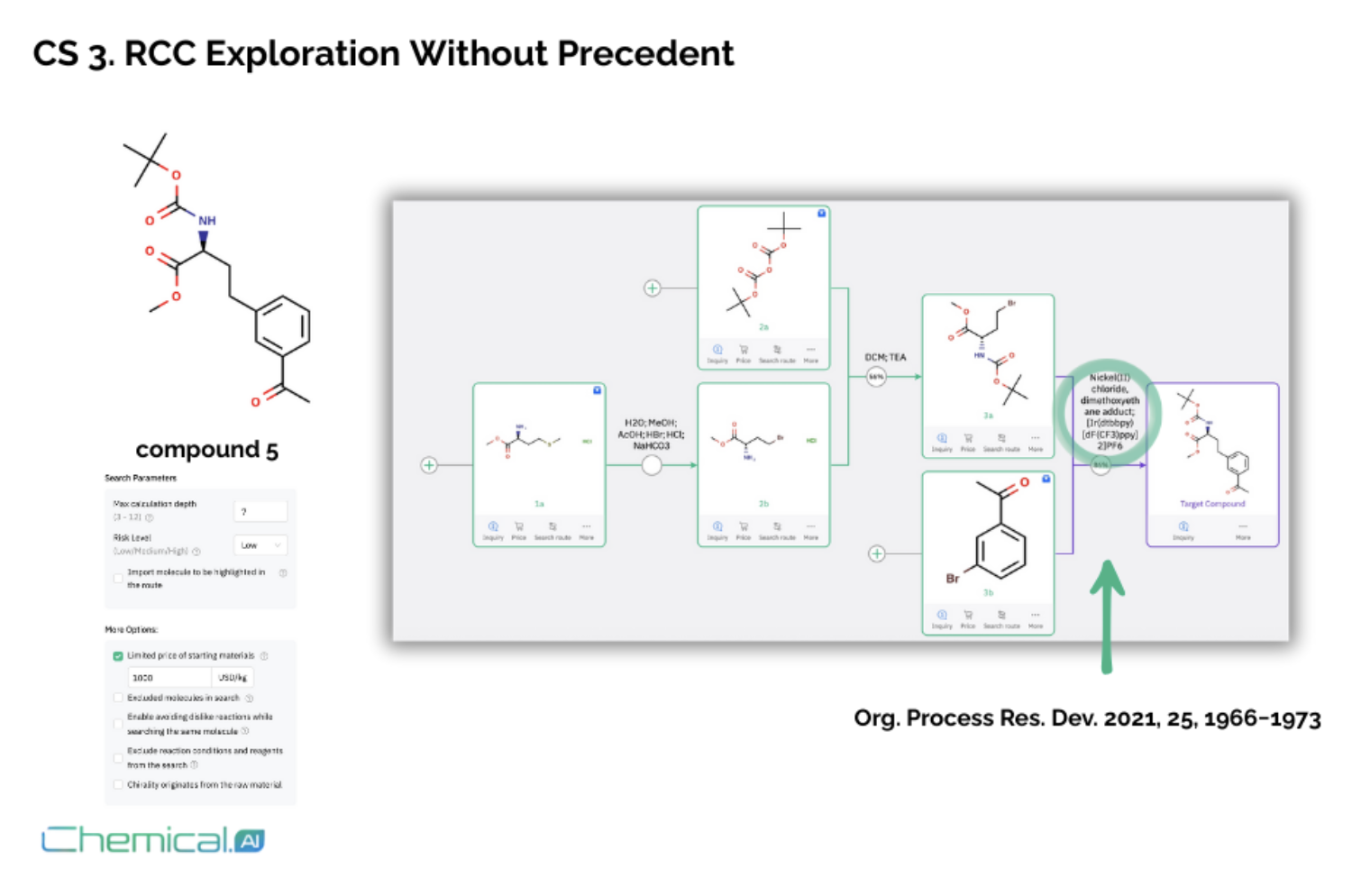
Figure 4. RCC Exploration Without Precedent
Notably, the predicted RCC step refers to the 2021 report (Org. Process Res. Dev. 2021, 25, 1966–1973), in which visible-light metallaphotoredox catalysis is used to generate alkyl radicals from β-bromoalanine via the iridium complex [Ir(dF(CF₃)ppy)₂(dtbbpy)]PF₆. These radicals undergo radical cross-electrophile coupling by engaging a nickel catalyst formed from NiCl₂·dtbbpy, enabling C(sp³)–C(sp²) bond formation with aryl bromides while retaining full enantiopurity. The transformation proceeds efficiently in dimethoxyethane (DME) using tris(trimethylsilyl)silane as the reductant, providing broad functional-group tolerance and scalability (Figure 4). This example illustrates that the algorithm can not only identify known transformations but also make informed, mechanistically aligned predictions for radical cross-coupling processes, highlighting its ability to reason beyond simple pattern-matching.
The aforementioned case studies highlight ChemAIRS’s ability to autonomously recognize, identify, and exploit radical cross-coupling as a core synthetic strategy. The system not only reproduces expert-level decision-making, but also proposes practical and efficient pathways consistent with cutting-edge advances in synthetic methodology. Taken together, these results demonstrate ChemAIRS’s potential as a powerful AI-driven tool for retrosynthetic design, one capable of bridging automated computation with human chemical intuition, particularly for complex radical cross-coupling transformations.
3. The Frontline of Radical Cross-Coupling: Hydrazide Coupling and Beyond
While AI can now suggest radical disconnections, the chemistry itself is advancing just as quickly. We’ve seen how RCC can simplify synthesis, but from a practical perspective, is RCC convenient in the lab?
In essence, radicals form when a molecule gains or loses a single electron. There are three main ways to make that happen: photochemical, electrochemical, and thermal (chemical) methods. Each approach has its own strengths, but from an operational standpoint, they can be more cumbersome than classic two-electron couplings: setups can be more specialized, and reproducibility may drop due the heterogeneous nature of these methods.
That’s changing rapidly. For example, a recent breakthrough, exogenous redox-free RCC using sulfonyl hydrazides, makes RCC dramatically simpler. The key innovation lies in using sulfonyl hydrazides as internal reductants that balance the redox steps while still generating radicals. This clever design removes the need for external oxidants, reductants, or specialized photochemical or electrochemical setups. In practice, this makes RCC nearly as simple as running a Suzuki coupling: mix stable reagents and stir. To further facilitate adoption by medicinal chemists, sulfonyl hydrazides are now commercially available; for example, Knight Chemicals (LinkedIn, X/Twitter) provides a diverse library of bench-stable sulfonyl hydrazides that are useful for SAR studies.
This convergence marks the frontier where AI meets accessible chemistry: ChemAIRS can now propose RCC routes within minutes, and chemists can readily execute them using off-the-shelf reagents under mild conditions. The once-esoteric domain of radical cross-coupling is rapidly becoming a practical, everyday tool for the modern synthetic laboratory (Figure 5).
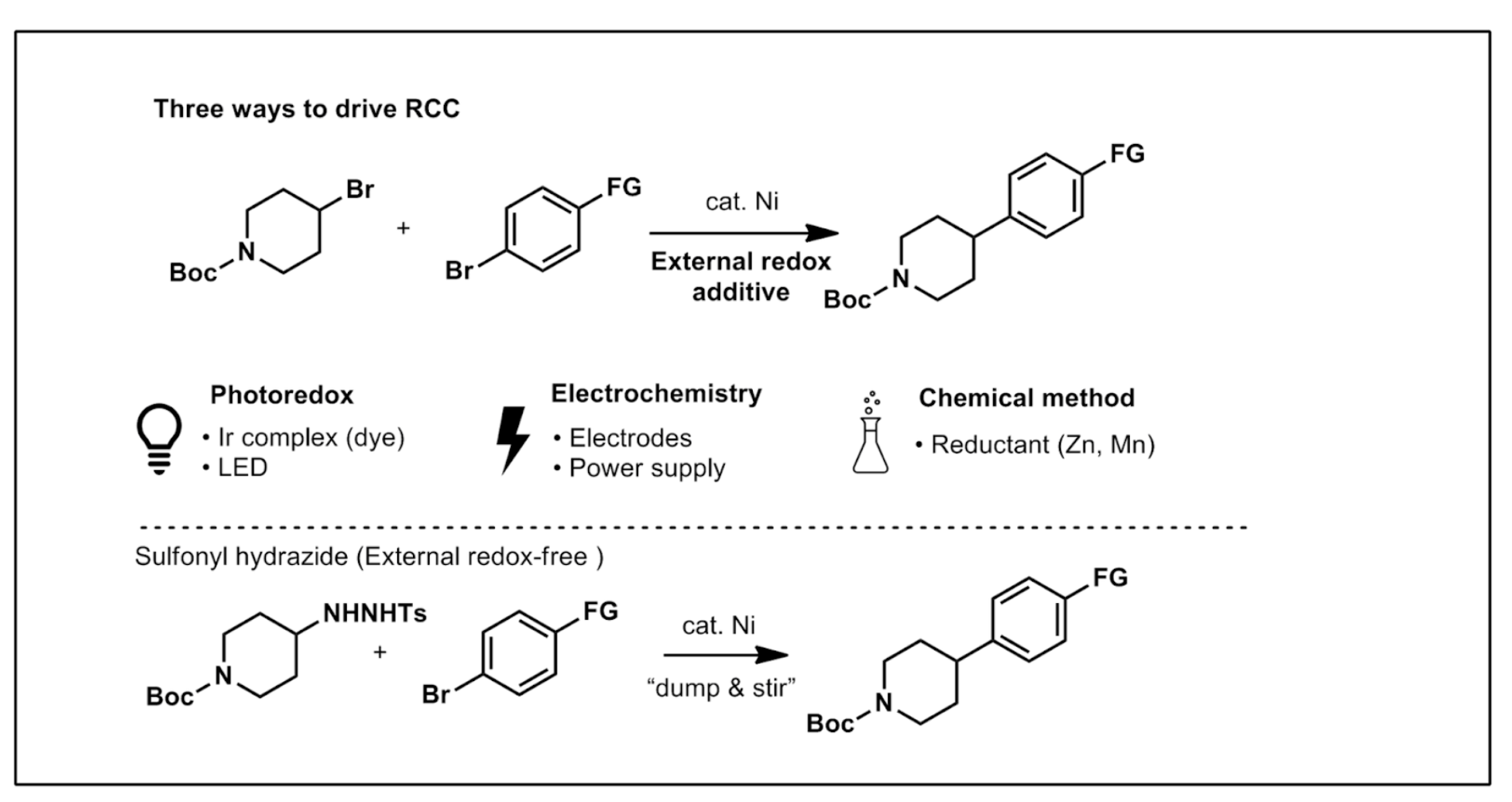
Figure 5. Three ways to drive RCC.
4. Integrating AI and Radical Cross-Coupling: From Retrosynthetic Design to Real-World Validation
Radical cross-coupling represents both a challenge and an opportunity for AI-driven retrosynthesis. RCC methods have redefined the boundaries of C–C bond formation by leveraging single-electron processes instead of traditional polar reactivity. The challenge, however, lies in recognizing when a radical disconnection is both feasible and synthetically advantageous, a task that even seasoned chemists must evaluate case by case.
The case studies presented earlier demonstrate that ChemAIRS can autonomously identify RCC-type disconnections as optimal strategies within retrosynthetic trees. In multiple examples derived from Baran’s 2022 JACS and 2024 Science publications, ChemAIRS ranked radical pathways as the most cost-efficient, operationally safe, and synthetically streamlined solutions, mirroring expert decisions while providing quantitative validation.
Through real-world validation, ChemAIRS demonstrates that AI can empower chemists to adopt complex radical methodologies with the same confidence as conventional cross-couplings. The outcome is more than accelerated route planning, it is the democratization of advanced reactivity, where the power of radical chemistry becomes accessible to any synthesis lab through algorithmic assistance.
In AI-driven retrosynthesis, algorithms learn chemical reactivity patterns directly from millions of published reactions. Instead of relying purely on rule-based logic, these models use techniques like deep neural networks, graph neural networks (GNNs), and transformers to infer which disconnections are chemically plausible. Combined with search algorithms such as Monte Carlo Tree Search (MCTS) or A-like heuristics*, AI systems can automatically generate and rank synthetic routes from target to starting materials, often in minutes.
Unlike early expert systems, which were limited to hand-coded reaction rules, today’s platforms blend data-driven learning with human chemical intuition. The result is a new generation of Computer-Aided Synthesis Planning (CASP) tools that can propose novel yet feasible synthetic routes, assess their cost and risk, and even suggest experimental conditions.
Platforms like ChemAIRS (Chemical.AI) exemplify this new era. They merge vast reaction databases with machine learning and heuristic planning to generate diverse, realistic routes, effectively serving as “AI copilots” for chemists. This hybrid framework allows ChemAIRS not only to identify feasible routes but also to prioritize them according to metrics of cost, scalability, and safety. Crucially, these capabilities enable it to navigate the mechanistically rich yet algorithmically challenging domain of radical cross-coupling (RCC) chemistry, an emerging reactivity paradigm rapidly reshaping modern organic synthesis.
Together, radical cross-coupling and AI-driven retrosynthesis mark a new era in synthetic chemistry — one where data-guided algorithms and experimental innovation advance hand in hand to expand the frontiers of molecular design.