
Blog
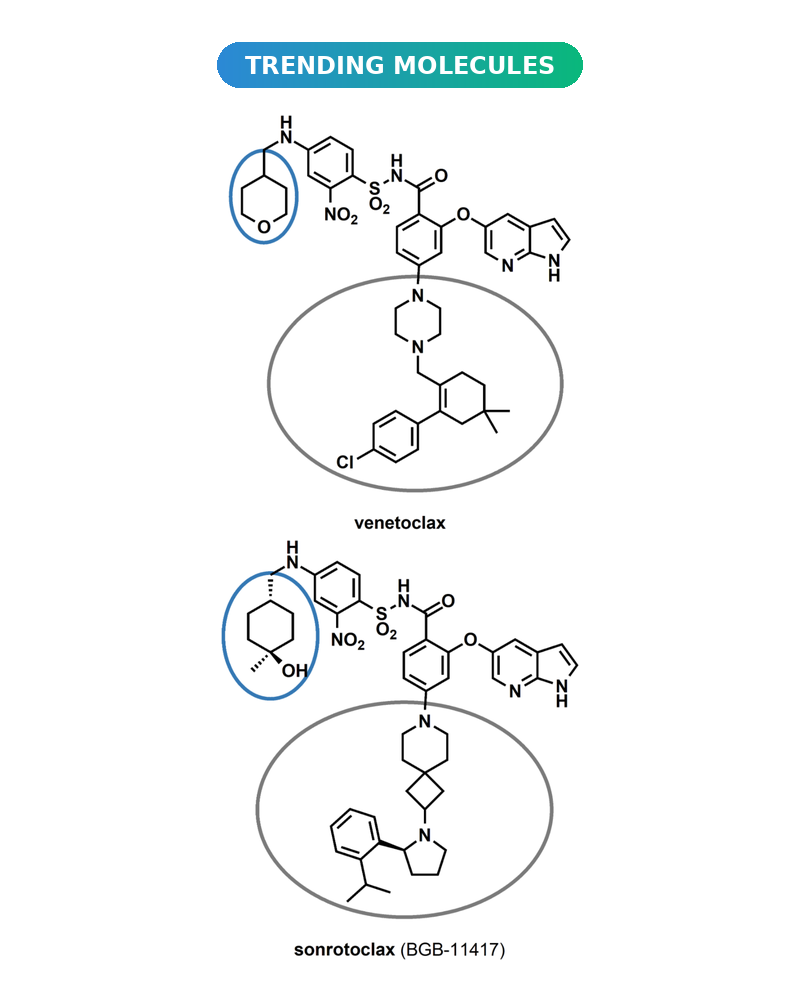
ChemAIRS®-Proposed Synthesis of Sonrotoclax (BGB-11417): From Nine Steps to Four, With Late-Stage Head Group Installation
ChemAIRS® generated a route to sonrotoclax (BGB-11417) that cuts the disclosed synthesis from nine steps to four, by installing the P2 head group last instead of carrying it through the whole sequence.
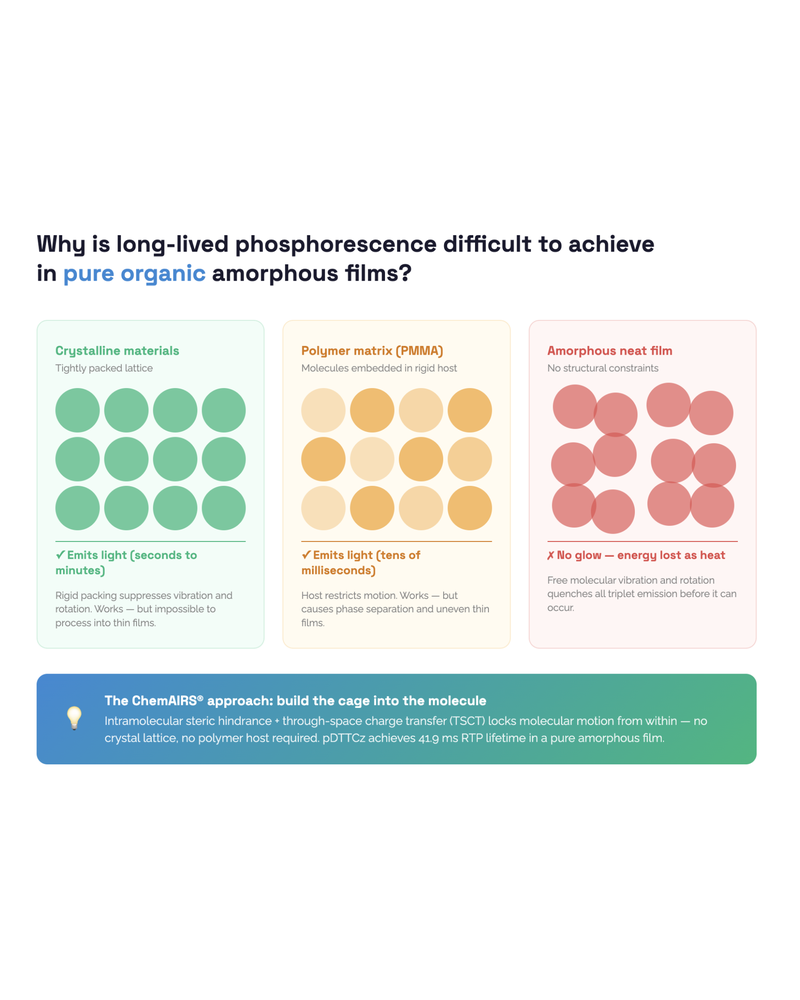
Room-Temperature Phosphorescence in Amorphous Films - and How to Actually Make It
Synthesis planning is often the gap between a promising material and one that can actually be made. We used pDTTCz - a novel carbazole-triazine room-temperature phosphorescent emitter with no synthesis precedent in the literature - as a test case for ChemAIRS. This is what came back.
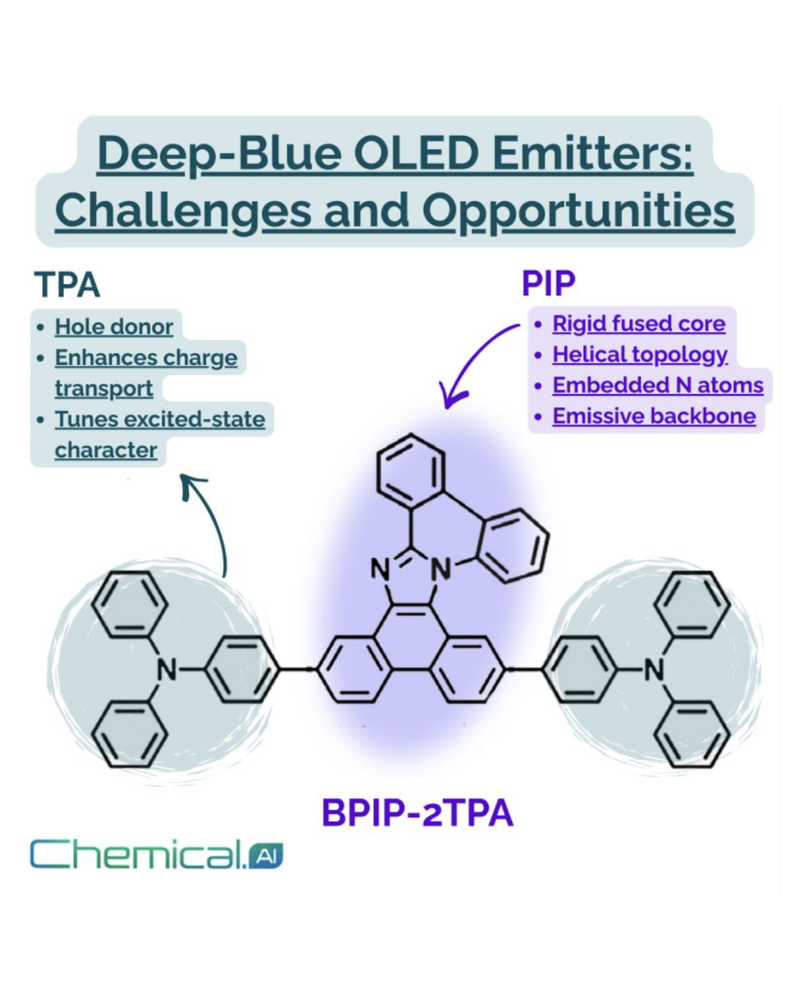
Exploring Synthetic Pathways for Deep-Blue OLED Emitters Using ChemAIRS
Deep-blue OLED emitters remain one of the most difficult materials to optimize due to efficiency roll-off, exciton loss, and limited device lifetime. In this post, we explore how regional isomerization of a rigid PIP (phenanthroimidazo[1,2-f]phenanthridine) core enables precise control of excited-state dynamics in high-performance deep-blue OLED materials. Using ChemAIRS retrosynthesis, we further examine how molecular design choices translate into multiple viable synthetic pathways, bridging excited-state engineering with practical synthesis planning for next-generation OLED emitters.
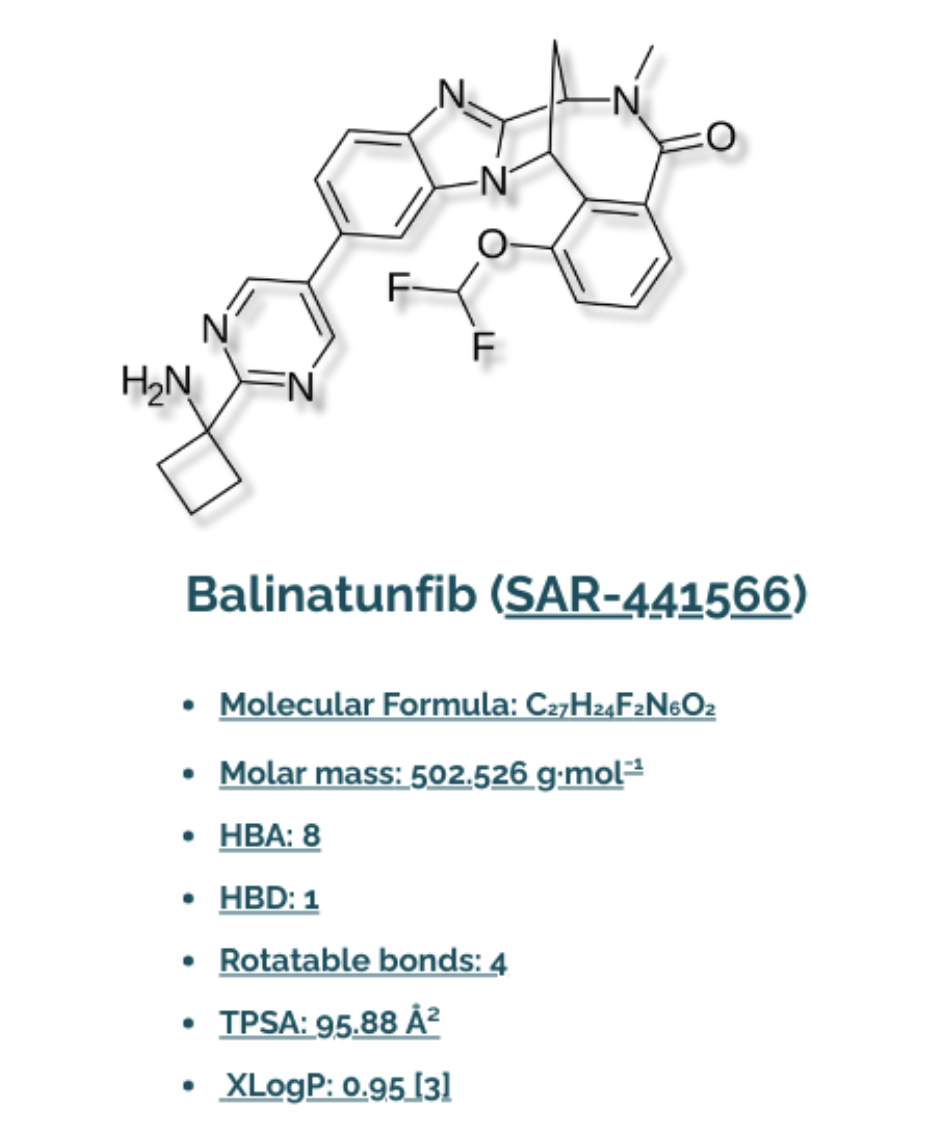
Human–AI Synergy in Retrosynthetic Analysis and Route Optimization of Balinatunfib
Discover how AI-driven retrosynthesis and human expertise converge in the development of Balinatunfib (SAR-441566), a first-in-class small-molecule TNF-α inhibitor. Learn about its unique allosteric mechanism, clinical progress, and how ChemAIRS revolutionizes route optimization, enabling cost-effective and scalable synthesis in modern drug discovery.