
Aleniglipron Synthesis: Key Findings and Route Comparison
Patent WO 2023/016546 reaches aleniglipron in 21 steps: amine 21a (12 steps) and acid 21b (8 steps), joined by a final amide coupling.
ChemAIRS proposes a 15-step route. Pyrazolopyridine 15a is prepared in 8 steps instead of 12.
ChemAIRS flags a side reaction in the final amide coupling and an n-BuLi chemoselectivity problem in the N-methylation step, and suggests K₂CO₃/CH₃I in DMF as the alternative.
All routes are computational proposals. Yield, selectivity and scalability need experimental confirmation.
Aleniglipron (GSBR-1290): An Oral Small-Molecule GLP-1R Agonist for Obesity
Aleniglipron (GSBR-1290) is an investigational, orally available, non-peptide agonist of the glucagon-like peptide-1 receptor (GLP-1R), developed by Structure Therapeutics for chronic weight management in adults with obesity or overweight, including those with weight-related comorbidities. It was designed as a biased agonist that selectively activates G-protein signaling at the receptor. In contrast to the peptide agonist semaglutide, aleniglipron is a fully synthetic small molecule dosed once daily by mouth.
Structure Therapeutics started the Phase 3 ACCOMPLISH program in August 2026. ACCOMPLISH-1 (NCT07654361) enrolls adults with obesity or overweight and at least one weight-related comorbidity. ACCOMPLISH-2 (NCT07654374) enrolls adults with obesity or overweight and type 2 diabetes. Topline results are expected in the second half of 2028 (Structure Therapeutics, September 8, 2026). Aleniglipron is an investigational drug and is not approved.
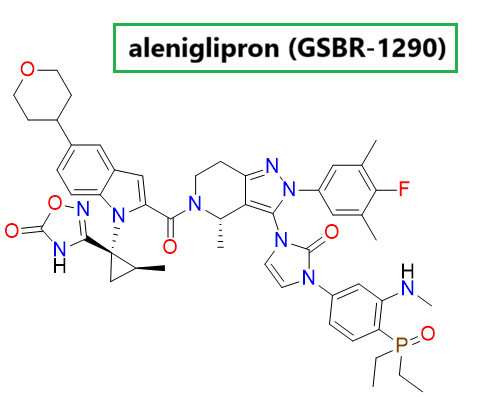
Chemical structure of aleniglipron (GSBR-1290).
Aleniglipron Synthesis and Retrosynthetic Analysis: A ChemAIRS® Case Study
Beyond its clinical development, aleniglipron presents an interesting case for synthetic organic chemistry. Patent WO 2023/016546 describes a multistep synthesis of aleniglipron. This published route is a fixed reference against which alternative disconnections can be compared. In this article, ChemAIRS, our AI retrosynthesis software, is used to (i) reconstruct the patent route, (ii) generate a shorter route, and (iii) flag reactions that should be checked before bench work.
Patent Route to Aleniglipron: 21 Steps (WO 2023/016546)
The synthesis in WO 2023/016546, filed by Gasherbrum Bio (a wholly owned subsidiary of Structure Therapeutics), is reconstructed in ChemAIRS as a 21-step sequence. Amine 21a (12 steps) and carboxylic acid 21b (8 steps) are prepared separately and coupled in the last step using HATU and TEA in DMF (Scheme 1).
In ChemAIRS, published intermediates and transformations are shown in green. Literature precedent is therefore visible directly in the route tree, which removes separate searches of patent and journal databases.
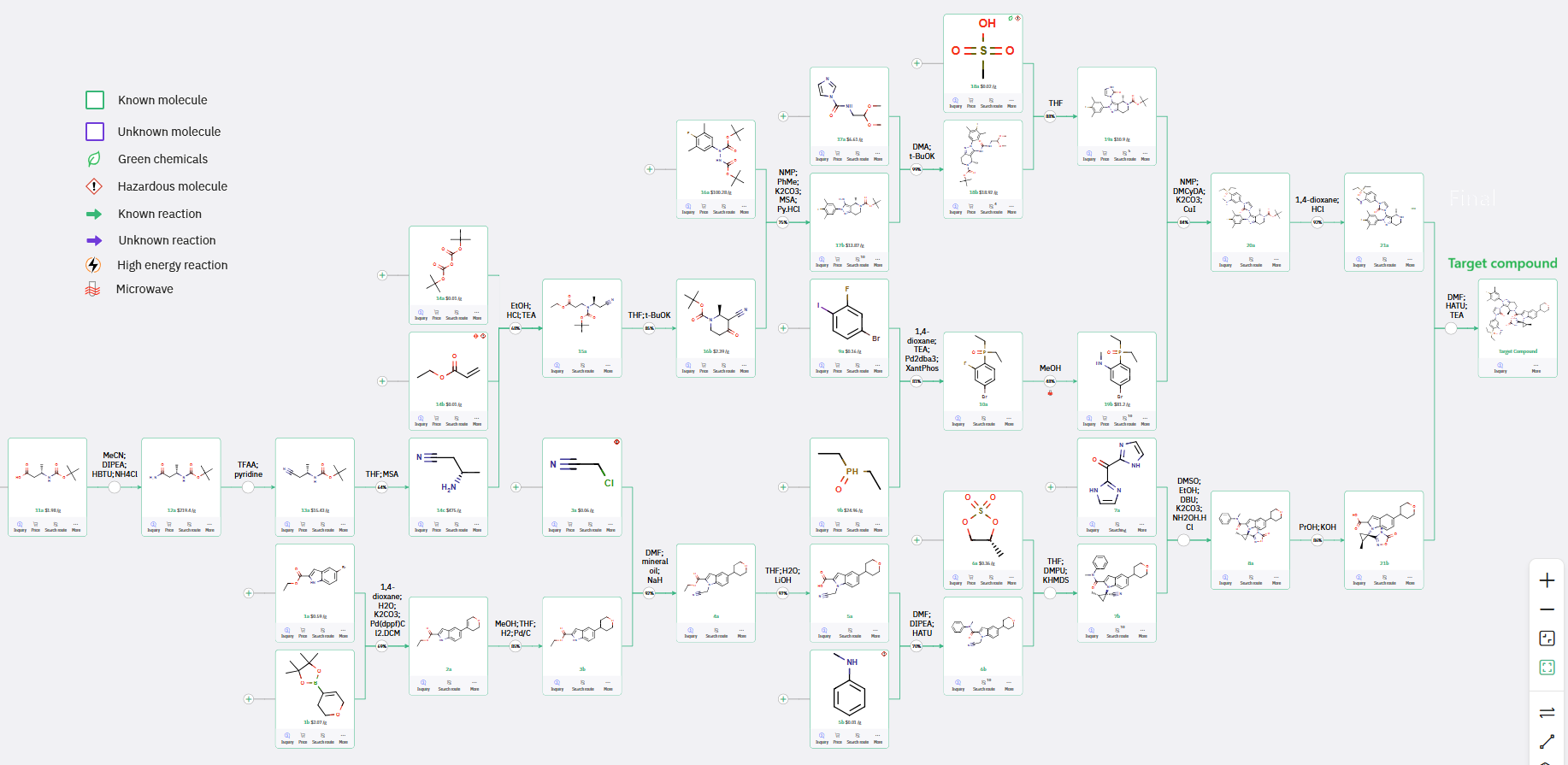
Scheme 1. Patent synthesis of aleniglipron (WO 2023/016546), 21 steps, reconstructed in ChemAIRS, with building blocks 21a and 21b joined by a final-stage amide coupling.
Side reaction flagged in the final amide coupling of aleniglipron synthesis
ChemAIRS flags a high-risk side reaction at the final amide coupling that the patent does not discuss (Figure 1). Two competing pathways are shown: intramolecular acylation of the oxadiazolone N-H by the activated acid, and acylation at the secondary N-methylaniline of 21a instead of the tetrahydropyridine N-H.
This observation illustrates how retrosynthetic analysis can be used not only to reconstruct a published synthetic route but also to highlight potential reaction selectivity and compatibility issues that may warrant further evaluation during experimental planning.
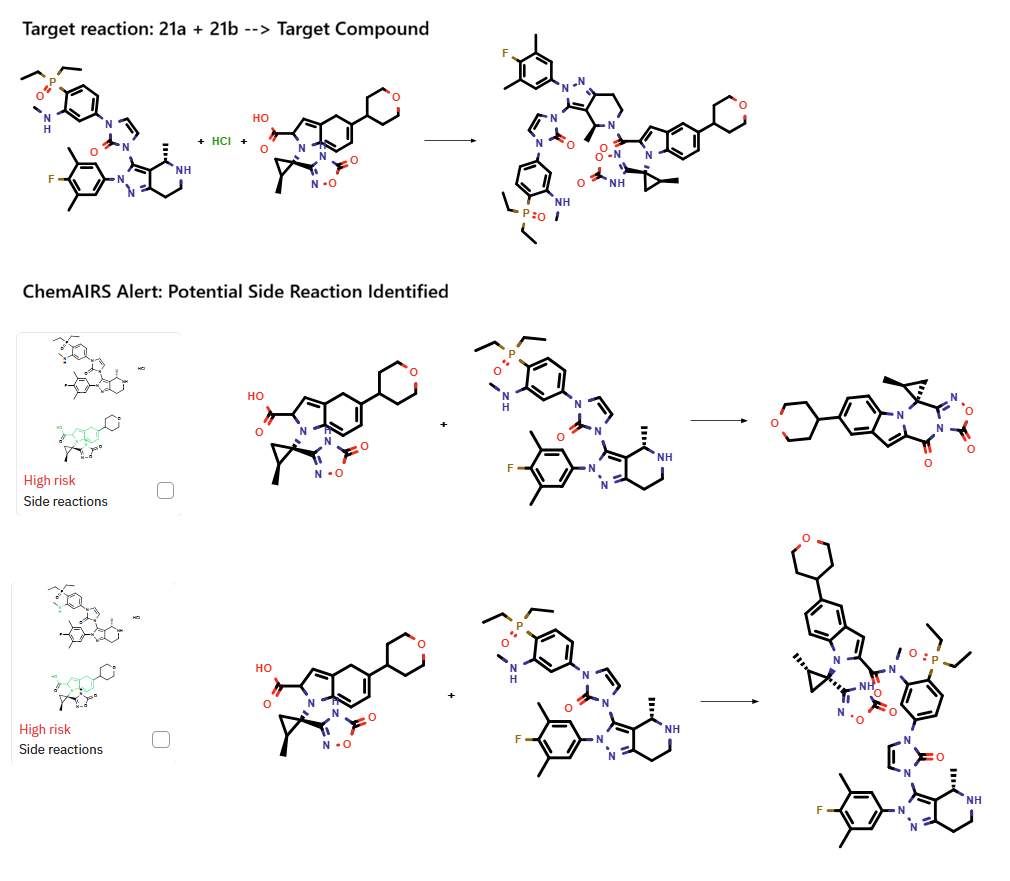
Figure 1. ChemAIRS Flagged a Potential Side Reaction in the Final Amide Coupling Step of the Patent-Reported Aleniglipron Synthesis.
ChemAIRS-Proposed 15-Step Route to Aleniglipron
ChemAIRS generated a route with fewer steps. As in the patent, the sequence converges on a final amide coupling, here between amine 15a and acid 15b (Scheme 2). Both fragments are reached by pathways that differ from the patent. 15a is prepared in 8 steps (patent: 12 steps for 21a) and 15b in 6 steps (patent: 7 steps for 21b). This route provides a basis for evaluating whether a shorter synthetic sequence could reduce laboratory time, reagent consumption, and the labour associated with multistep organic synthesis.
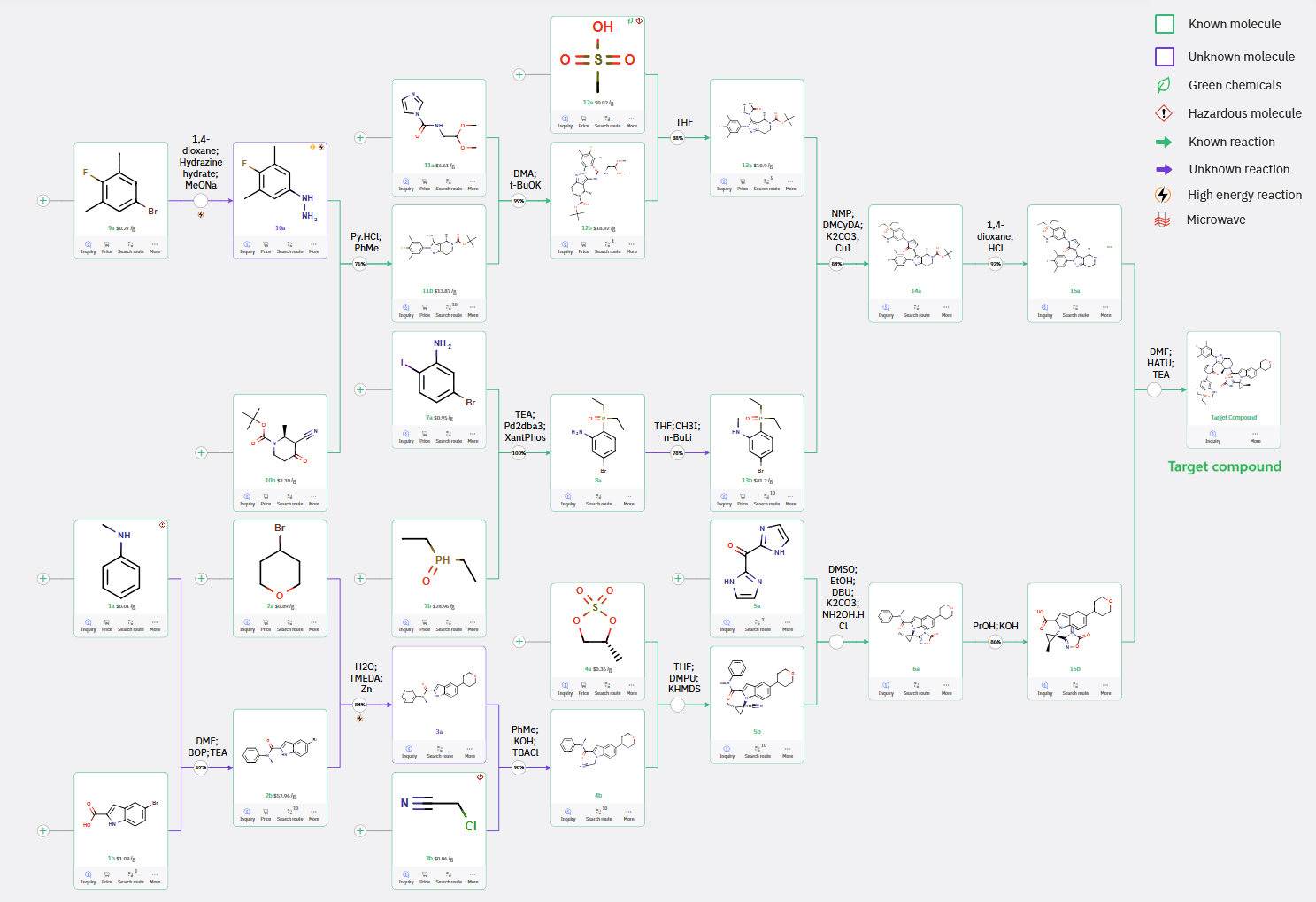
Scheme 2. ChemAIRS-proposed 15-step synthesis of aleniglipron, converging on a final-stage amide coupling of building blocks 15a and 15b.
A Shorter Route to the Pyrazolopyridine Intermediate 15a (8 Steps vs 12)
The largest saving is in pyrazolopyridine 15a (Scheme 3). The patent needs 12 steps to reach 21a. ChemAIRS proposes 8 steps for 15a, including a two-step preparation of pyrazolopyridine 11b that replaces a six-step sequence in the patent route.
The proposed sequence starts with C–N coupling of commercially available 5-bromo-2-fluoro-1,3-dimethylbenzene (9a) and hydrazine hydrate, giving aryl hydrazine 10a. Cyclocondensation of 10a with a Boc-protected cyano-ketone then gives pyrazolopyridine 11b. From 11b, the sequence follows transformations close to those in the patent to reach 15a.
Fewer steps to a key intermediate also shorten the preparation of analogues for SAR work, since the same core can be reached with less material and time.
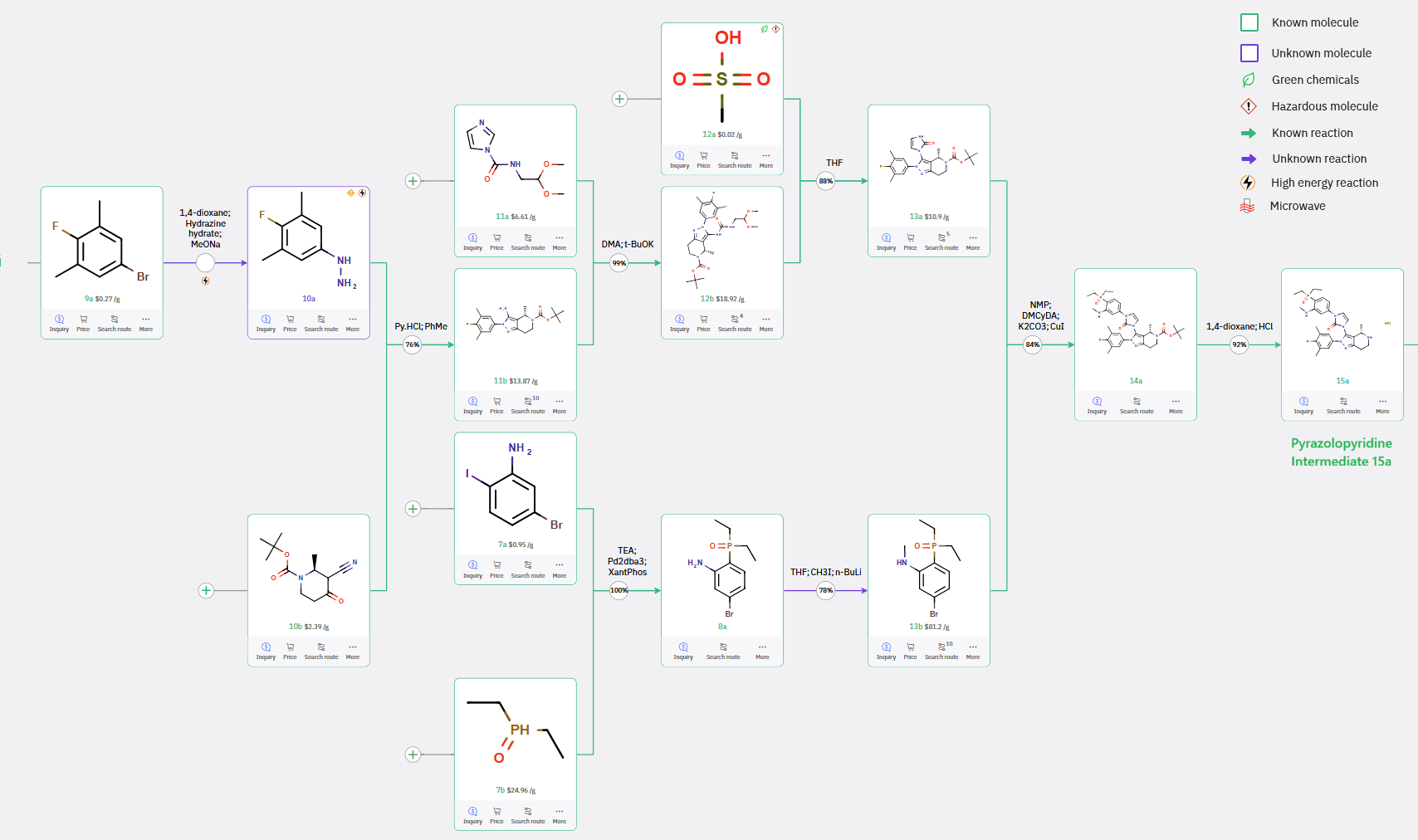
Scheme 3. ChemAIRS-proposed eight-step route to pyrazolopyridine intermediate 15a via Ullmann-type C–N coupling and cyclocondensation (patent: 12 steps).
Microwave-Free Route to Diethylphosphoryl-N-methylaniline 13b
Synthesis of amine 15a also requires diethylphosphoryl-N-methylaniline 13b. The patent prepares the corresponding fragment (19b, Scheme 1) in two steps: Pd/Xantphos-catalyzed P–C coupling of 4-bromo-2-fluoro-1-iodobenzene with diethylphosphine oxide, followed by fluoride displacement with methylamine under microwave heating. The microwave step is workable on a small scale but needs a practicality check before process development.
ChemAIRS proposes a route without microwave heating (Scheme 4). It starts with 4-bromo-2-iodoaniline (7a): Pd/Xantphos coupling with diethylphosphine oxide gives aniline 8a, and N-methylation gives 13b. Conventional conditions are easier to run in standard equipment and to carry into scale-up studies.
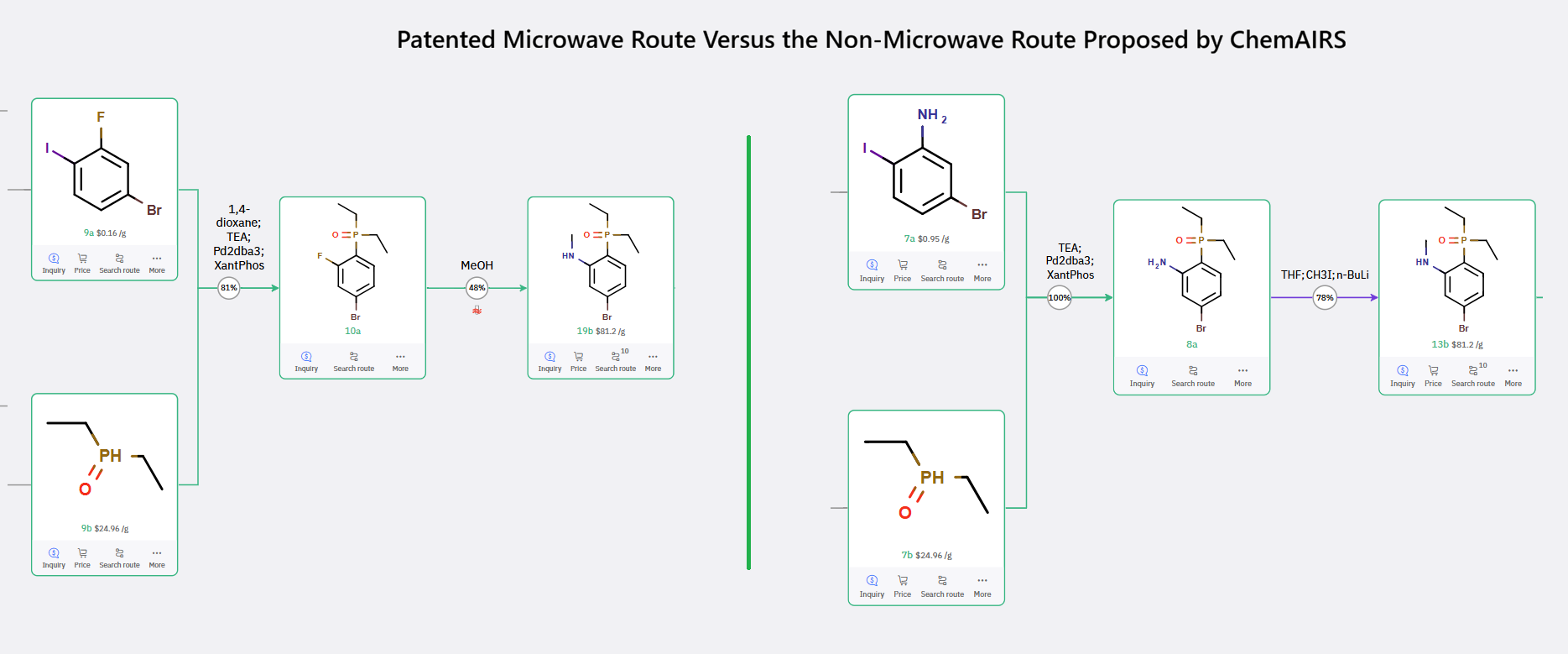
Scheme 4. Patent microwave route versus ChemAIRS microwave-free route to diethylphosphoryl-N-methylaniline 13b.
Reaction Risk Assessment: n-BuLi Chemoselectivity in the N-Methylation of 8a
ChemAIRS flags the N-methylation of 8a with n-BuLi as a chemoselectivity risk (Figure 2). With the aryl bromide and the diethylphosphoryl group present, competing pathways include lithium–bromine exchange and deprotonation at the P-CH₂ positions. Either would compromise the integrity of 13b, and the aryl bromide is needed in later steps.
As a milder alternative, ChemAIRS suggests K₂CO₃ and CH₃I in DMF at room temperature, based on a precedent in CN114728994 (2022). This avoids organolithium conditions and the competing pathways above. The precedent uses a different substrate, so selectivity for mono-N-methylation over N,N-dimethylation, and conversion, needs to be confirmed for 8a.
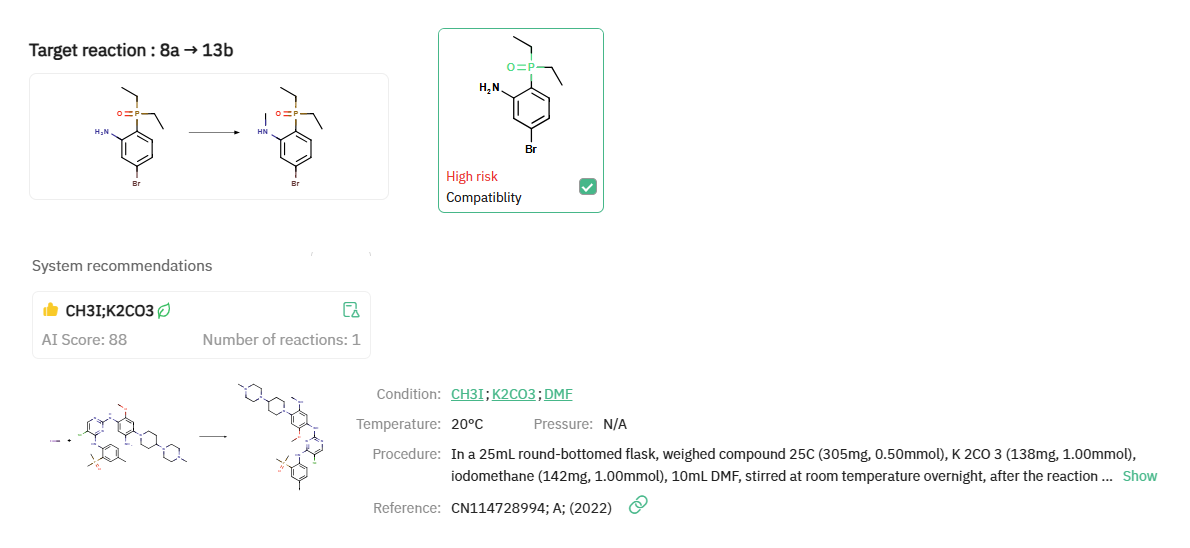
Figure 2. ChemAIRS reaction-risk assessment showing n-BuLi chemoselectivity issues and the K₂CO₃/CH₃I alternative.
ChemAIRS-Assisted Retrosynthetic Analysis of Aleniglipron and Its Key Intermediates
For aleniglipron, ChemAIRS reconstructed the 21-step route in WO 2023/016546, proposed a 15-step alternative with an 8-step route to 15a, a microwave-free route to 13b, and flagged two reaction risks: a side reaction in the final amide coupling and n-BuLi chemoselectivity in the N-methylation.
An algorithm-generated route is a candidate and not a validated procedure. Yield, selectivity, reproducibility and scalability must be confirmed in the lab. Used before experiments, literature retrieval, alternative route generation and reaction risk flags help choose which routes and steps to test first, which is useful in organic synthesis, medicinal chemistry and early process chemistry.
Aleniglipron Synthesis FAQ
What is the reported synthesis route of aleniglipron?
Patent WO 2023/016546 describes a 21-step synthesis. Amine 21a (12 steps) and acid 21b (8 steps) are coupled in the final step.
Can AI retrosynthesis shorten the aleniglipron synthesis?
In this case study, ChemAIRS proposed a 15-step route, including an 8-step route to pyrazolopyridine 15a against 12 steps in the patent. The route is a computational proposal and needs experimental validation.
What reaction risks did ChemAIRS flag?
A side reaction in the final amide coupling, and n-BuLi chemoselectivity (Li–Br exchange and P-CH₂ deprotonation) in the N-methylation of 8a. K₂CO₃/CH₃I in DMF was suggested as the alternative for the second.
Is aleniglipron approved?
No. Aleniglipron is investigational. It is in the Phase 3 ACCOMPLISH-1 and ACCOMPLISH-2 trials, with topline data expected in the second half of 2028.
Related reading
References
Patent WO 2023/016546, Gasherbrum Bio (Structure Therapeutics) https://patents.google.com/patent/WO2023016546A1/en?oq=WO+2023%2f016546
Structure Therapeutics. Second Quarter 2026 Financial Results and Recent Highlights (press release, August 6, 2026; SEC Form 8-K, Exhibit 99.1).
Structure Therapeutics. Positive Clinical Data Across Oral Small Molecule Amylin and GLP-1 Programs for Chronic Weight Management (press release, September 8, 2026; SEC Form 8-K, Exhibit 99.1)