

Process Chemist
Ideation Beyond Search

-
Process chemistry is the work of taking a synthetic route proven at small scale and making it reliable, safe, and efficient at larger scale. This often means re-evaluating reagents, solvents, and conditions that were fine for a single gram but become impractical, unsafe, or costly at kilo scale or beyond.
-
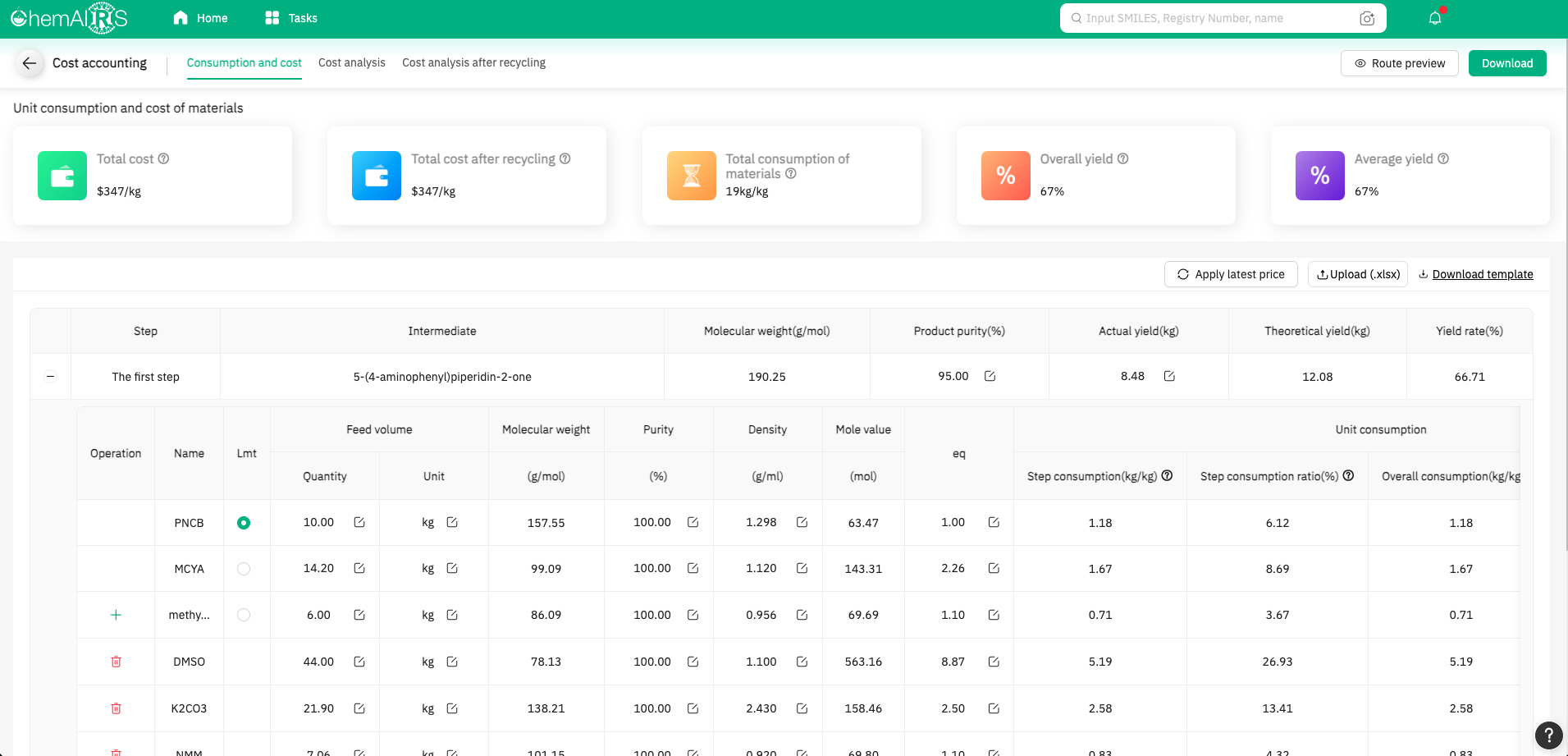
ChemAIRS® evaluates a synthetic route with scale-up in mind, surfacing steps likely to face robustness or safety issues at larger volumes, so process teams can address them before committing to a scale-up campaign.
Process Chemistry in Practice:
Route Design for Macrocyclic 3CLpro Inhibitors
Streamlining access to therapeutics, EP22
Read the case study FDA-AcceptedRoute Design for Daraxonrasib (RMC-6236)
RAS(ON) inhibitor
Read the case study Real-World ValidationRadical Cross-Coupling Chemistry Empowered by AI
AI-driven retrosynthesis, validated at the bench
Read the case studyCondition Optimization for Process Development Teams
-
Condition optimization is the process of identifying the best solvent, temperature, catalyst, and reagent combination for a given reaction step, typically to maximize yield, minimize impurities, or improve reproducibility at scale.
-
ChemAIRS® searches across viable condition sets for a given step and ranks them by predicted performance, reducing the number of physical experiments needed to land on a workable, scalable condition set.
Condition Optimization in Practice:
Impurity Prediction for Process Development Teams
-
Impurity prediction identifies likely byproducts or side reactions before a synthesis step is run, so process teams can anticipate purification challenges or regulatory concerns ahead of scale-up rather than discovering them in the plant.
-
ChemAIRS® flags steps likely to generate problematic impurities, turning what's traditionally an unexpected surprise late in development into something identified and addressed early.
Impurity Prediction in Practice:
Bayesian Optimization for Process Development Teams
-
Bayesian optimization is a method for efficiently searching a large space of possible conditions or parameters, using results from each experiment to intelligently choose the next one, minimizing the total number of experiments needed to find an optimal outcome.
-
ChemAIRS®' Bayesian Optimization tool uses machine learning to learn from past experiments and recommend the most promising next experiment, helping chemists reach optimal reaction conditions in fewer rounds with less material waste. It automatically suggests a data-driven starting set of experiments, can draw on a team's own historical reaction data to improve its recommendations, and is fully integrated with the retrosynthesis module so optimized conditions carry straight into synthetic planning.
A route that works at bench scale doesn't always hold up at kilo or pilot scale. Conditions that looked robust in a lab-scale run can introduce impurities, yield drops, or safety risks once volumes increase. ChemAIRS optimizes conditions and predicts impurity risk before scale-up, not after.
How AI Helps Process Chemists Scale Synthetic Routes Safely
Process Chemistry for Process Development Teams
Featured Case Study for Process Chemists
Ready to optimize your synthesis strategies?
Join the leading chemists, pharma companies, and CROs using ChemAIRS to accelerate discovery, improve efficiency, and reduce costs.