
Synthesis of Daraxonrasib (RMC-6236): ChemAIRS® Retrosynthetic Analysis Behind the FDA-Accepted RAS(ON) Inhibitor
Daraxonrasib (RMC-6236) NDA Accepted by the FDA for Metastatic Pancreatic Cancer
Daraxonrasib (RMC-6236), an oral RAS(ON) multi-selective inhibitor developed by Revolution Medicines, was approved by the FDA on August 26, 2026, for previously treated metastatic pancreatic ductal adenocarcinoma (PDAC).¹ Previously granted both Breakthrough Therapy and Orphan Drug designations, as well as Priority Review, the approval was supported by the Phase 3 RASolute 302 trial (NCT06625320).² In patients with RAS G12–mutant PDAC (the primary analysis population), daraxonrasib delivered a median overall survival of 13.2 months versus 6.6 months with investigator's choice chemotherapy.

Figure 1 Chemical structure of daraxonrasib (RMC-6236), a small molecule pan-RAS inhibitor
Why Daraxonrasib? A Multi-Selective Approach to Active RAS
RAS drives more than 90% of pancreatic cancers, and until recently the ligand-binding surface of active, GTP-bound RAS was considered undruggable.³ The two approved targeted agents, sotorasib and adagrasib, address only the KRASG12C subset (roughly one in seven RAS-driven tumours) and bind the inactive GDP-bound state.
In contrast, daraxonrasib binds a composite pocket that is only assembled once the molecule and cyclophilin A (CypA) form a binary complex; that complex then recruits GTP-bound RAS, sterically occluding effector binding to RAF. The binding surface is conserved across mutant and wild-type KRAS, NRAS, and HRAS, giving broad-spectrum activity in a single molecule.
Synthesis of Daraxonrasib: ChemAIRS® Retrosynthetic Analysis
ChemAIRS® was used to perform retrosynthetic analysis of daraxonrasib in two complementary modes: one biased toward discovery-stage practicality, the other toward scale-up considerations. Daraxonrasib itself is a beyond-rule-of-five macrocycle (MW 811) carrying a variety of structural features including a thiazole core, a chiral piperazic acid embedded in the macrolactone, a trans-methylcyclopropyl amide, and an atropisomeric indole–pyridine biaryl linkage.[3] Its dense stereochemistry and multiple heterocycles make it a demanding scale target.
Route 1: Retrosynthesis Module with Cost-Controlled Building Blocks
The Retrosynthesis module returned a fully linear, 8-step longest linear sequence (LLS) drawn from three patents⁴⁻⁶ and ends with a HATU-mediated amide coupling reported by Cregg and coworkers.³ Multi-reference stitching of this kind is a distinctive Retrosynthesis capability: rather than transcribing a single reported sequence or generating an all-algorithmic route, ChemAIRS® assembles known chemistry, where possible, from wherever the best precedent lives.
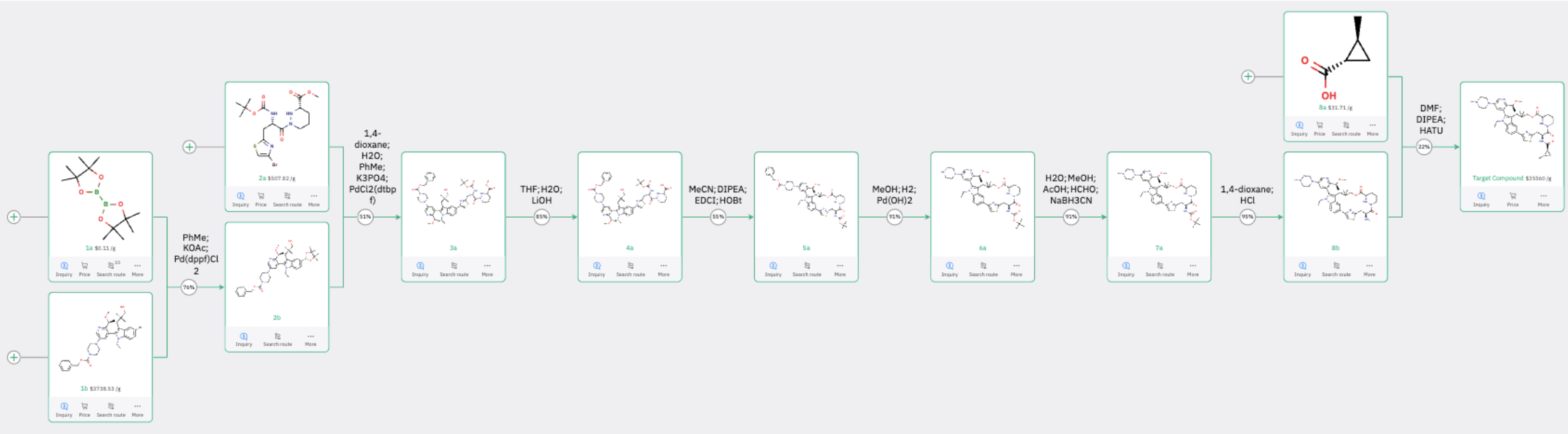
Scheme 1 Recapitulation of a known 8-step route to daraxonrasib (RMC-6236) by ChemAIRS®
Two of the building blocks near the start of that 8-step route, namely 2a and especially 1b, may be too expensive for some drug discovery campaigns to absorb. Further manual disconnection of 2a and 1b in-platform surfaced a set of raw materials that could all be purchased for under $60/gram, at the cost of nine additional known reactions. The extended route runs 17 total steps with a 13-step LLS.
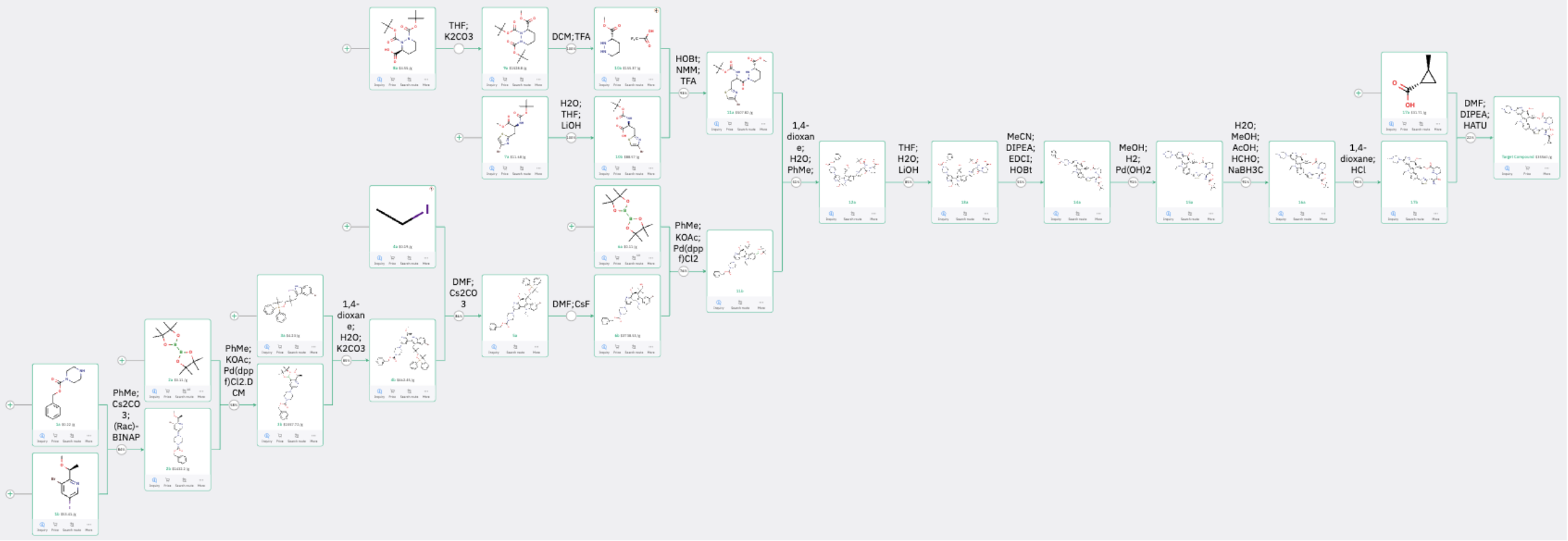
Scheme 2 Extended route to daraxonrasib (RMC-6236) with all raw materials available for under $60 per gram
Two things are important to note. First, Chemical.AI's vendor network is broad enough to support advanced building blocks in the initial route, so chemists don't need to compromise on strategy to get a viable synthesis on paper. Second, employing AI-assisted manual disconnection of those advanced building blocks with the same user interface (see Schemes 3 and 4) provides budget savings for the project and time savings for the chemist tasked with route design.
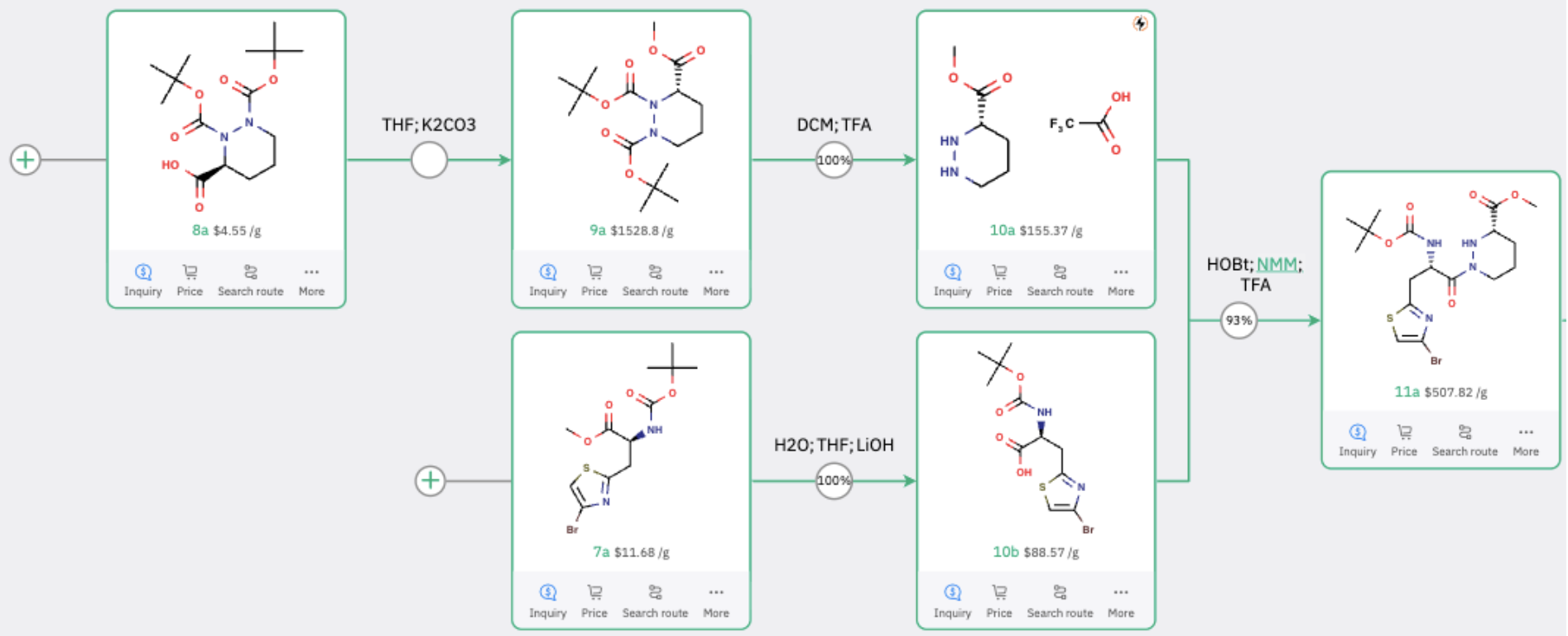
Scheme 3 A manually introduced convergent route to intermediate 11a
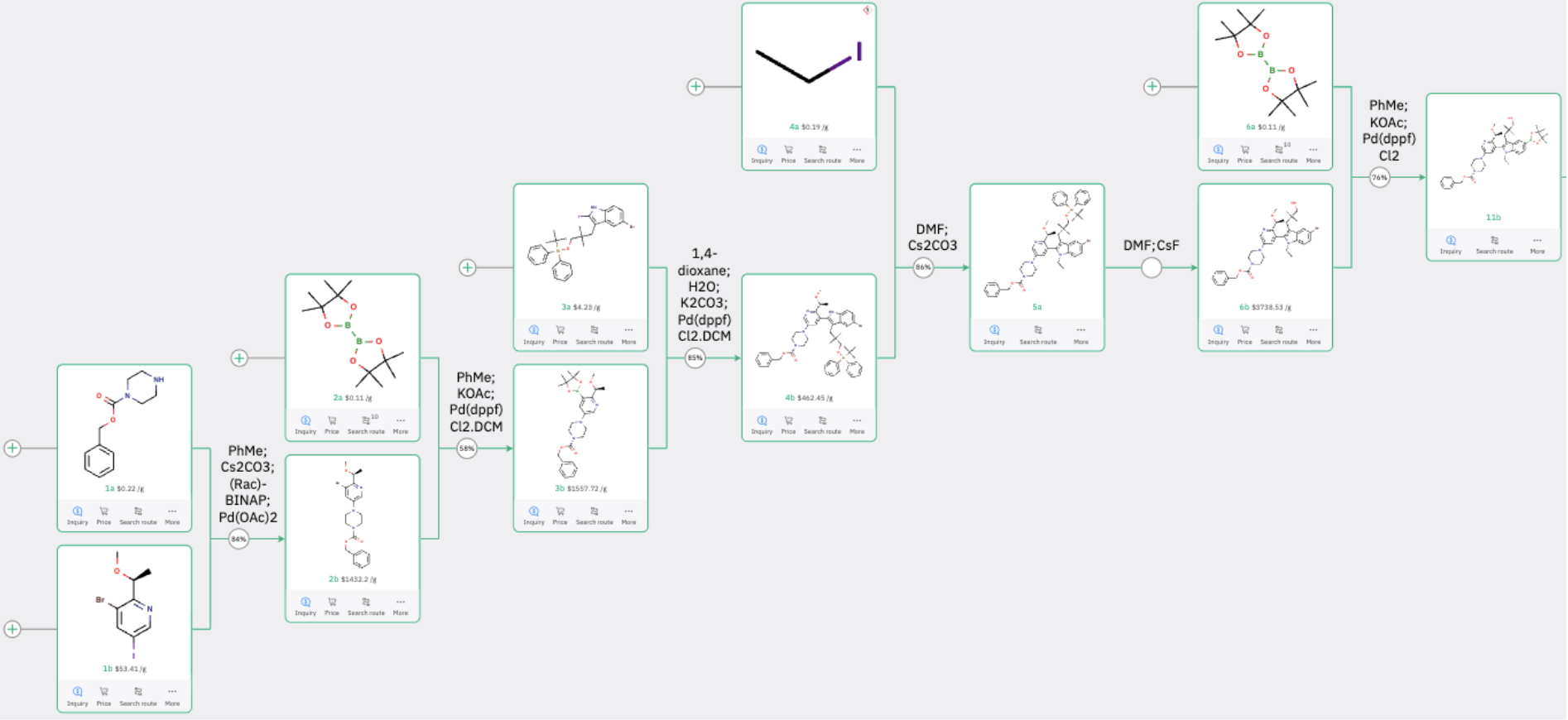
Scheme 4 A manually introduced five-step route to intermediate 6b
Route 2: Process Chemistry Module with Algorithm-Designed Endgame
Running daraxonrasib through the Process Chemistry module returned a longer, more convergent route, which is largely based on known chemistry but includes some algorithm-designed steps in the endgame (Scheme 5). The full route comprises 32 total steps with an 18-step LLS, with all building blocks known to be available in kilogram quantities and many reactions previously described on larger scale; for the reactions without direct precedent on large scale, a majority have at least one analogous transformation reported either on 100-gram scale or greater, or in Organic Process Research & Development.
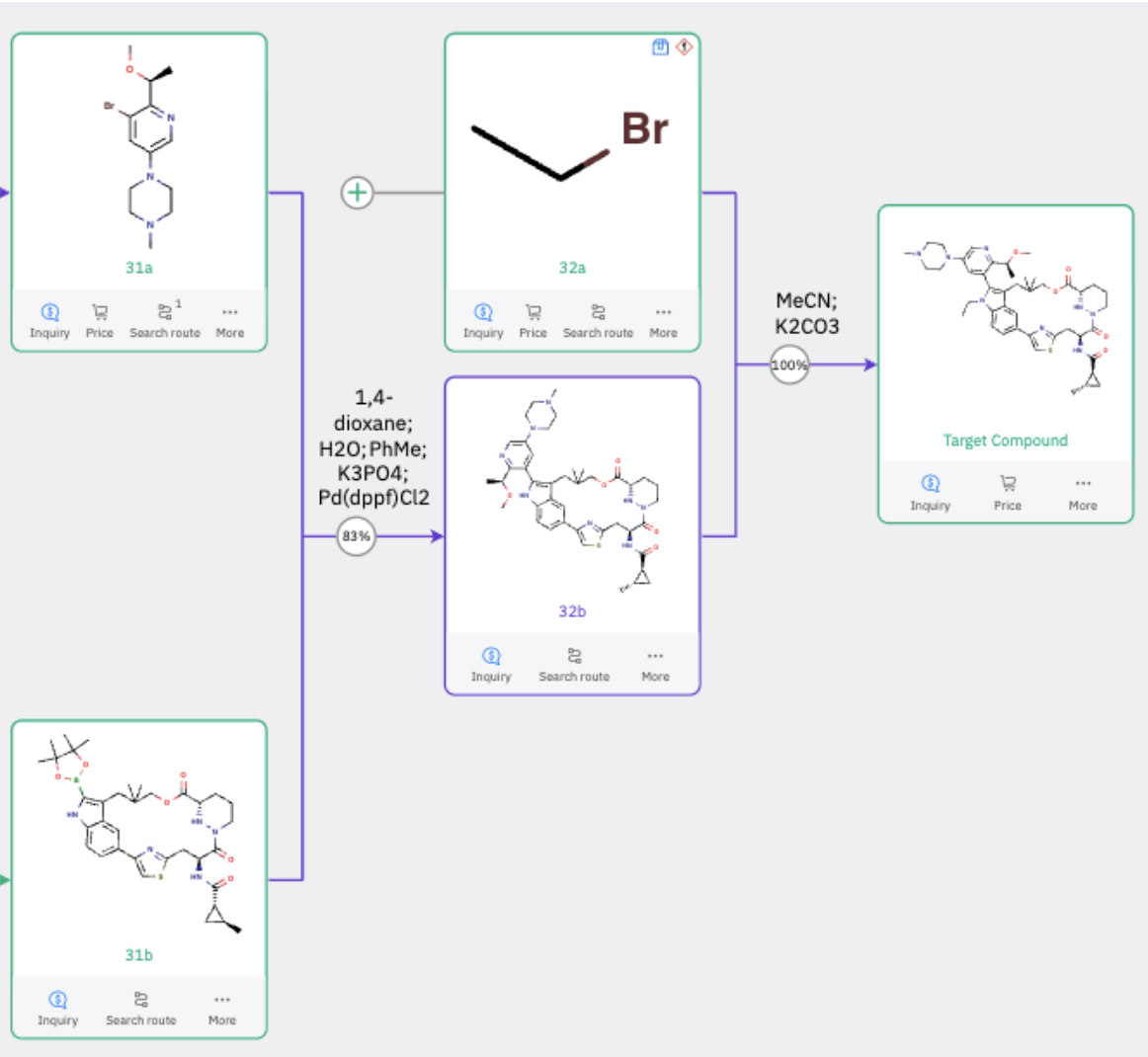
Scheme 5 The endgame of the ChemAIRS®-inspired Process Chemistry route to daraxonrasib (RMC-6236)
There are many interesting chemistry highlights in the ChemAIRS®-designed synthesis of daraxonrasib. For instance, intermediate 31a is known, but has never been prepared according to the proposed Buchwald–Hartwig amination between N-methylpiperazine (30a) and 3-iodopyridine derivative 30b (Scheme 6). The path to 30b, meanwhile, begins with a 120-gram-scale asymmetric transfer hydrogenation of 26a to afford 27a⁷ and subsequent 405-kilo-scale O-methylation to prepare intermediate 28a.⁸

Scheme 6 Prepation of intermediate 31a in the ChemAIRS®-inspired Process Chemistry route to daraxonrasib (RMC-6236)
The approach to the other key intermediate in the endgame, 31b, features the introduction of chiral cyclopropanecarboxylic acid derivative 24a, which could be obtained by ozonolysis of aryl precursor 23a (Scheme 7).⁹ This portion of the synthesis also features closure of the macrocycle (21a) by lactonization under mild conditions.¹⁰

Scheme 7 Preparation of intermediate 31b from 19a in the ChemAIRS®-inspired Process Chemistry route to daraxonrasib (RMC-6236)
To prepare 19a, fragment 18a can be prepared starting from oxazolidinone 13a and carboxyxlic acid 13b, with the key step in this section being an asymmetric electrophilic hydrazination reaction to introduce the required stereochemistry for protected piperazic acid 16a (Scheme 8).¹¹ The more complex fragment 18b can be assembled over a total of 12 known steps, contributing 10 steps to the total LLS (Scheme 9). Whether two steps could be saved by carrying the TBDPS protecting group, instead of replacing it with an acyl group (overall transformation of 5a to 7a), would presumably depend on its ease of handling and purification on a larger scale.

Scheme 8 Five-step synthesis of piperazic acid ester intermediate 18a in the ChemAIRS®-inspired Process Chemistry route to daraxonrasib (RMC-6236)

Scheme 9 Twelve-step synthesis of key intermediate 18b in the ChemAIRS®-inspired Process Chemistry route to daraxonrasib (RMC-6236)
What Is ChemAIRS®? Computer-Aided Synthesis Planning for Drug Hunters
ChemAIRS® is a computer-aided synthesis planning (CASP) platform that proposes retrosynthetic routes to existing and novel molecules, ranking them by feasibility and by access to readily available building blocks. Its Retrosynthesis module combines machine learning with encoded chemical logic, and every step remains open to interrogation, so chemists can troubleshoot a disconnection or explore alternative methodology rather than accept a route as given. The platform is built to extend a chemist's strategic reach, not to substitute for it.
How ChemAIRS® Handled the Daraxonrasib Synthesis
ChemAIRS® reconstructed two viable routes for a first-in-class, stereochemically enriched bRo5 macrocycle by pulling from the published literature and patent estate at every disconnection where precedent exists, and by designing chemistry where it does not.
The Retrosynthesis module returned a fully linear 8-step LLS route derived from multiple sources. Two expensive building blocks in that route were subject to manual disconnection within ChemAIRS®, leading to the identification of a complete set of raw materials priced below $60 per gram, albeit this extended the synthesis to 17 total steps with a 13-step LLS. The Process Chemistry module returned a 32-step, 18-step-LLS route with all building blocks available on kilo-scale and three algorithm-designed steps, one directly feeding the final alkylation reaction.
References
FDA approves first in class targeted therapy for metastatic pancreatic cancer. News release. US Food and Drug Administration. August 26, 2026. Accessed September 1, 2026. https://www.fda.gov/news-events/press-announcements/fda-approves-first-class-targeted-therapy-metastatic-pancreatic-cancer
O'Reilly EM, Wainberg ZA, Hendifar AE, et al; RASolute 302 Trial Investigators. Daraxonrasib or chemotherapy in previously treated metastatic pancreatic cancer. N Engl J Med. 2026;395(4):325-337. https://doi.org/10.1056/NEJMoa2605555
Cregg J, Edwards AV, Chang S, et al. Discovery of daraxonrasib (RMC-6236), a potent and orally bioavailable RAS(ON) multi-selective, noncovalent tri-complex inhibitor for the treatment of patients with multiple RAS-addicted cancers. J Med Chem. 2025;68(6):6064-6083. https://doi.org/10.1021/acs.jmedchem.4c02314
Aggen J, Burnett GL, Pitzen J, et al., inventors; Revolution Medicines, Inc., applicant. RAS Inhibitors. US patent 20210130326A1. May 6, 2021.
Koltun ES, Cregg J, Aay N, et al., inventors; Revolution Medicines, Inc., applicant. RAS Inhibitors. US patent 0130369A1. May 6, 2021.
Buckl A, Burnett GL, Cregg J, et al., inventors; Revolution Medicines, Inc., applicant. RAS Inhibitors. WIPO patent WO2023060253A1. April 13, 2023.
Knox JE, Koltun ES, Liu J, et al., inventors; Revolution Medicines, Inc., applicant. RAS Inhibitors. US patent 0154171A1. May 15, 2025.
Li S, Yi L, Liu J, Lobben P, Wang R, Ballmer S, Huang X, inventors; Revolution Medicines, Inc., applicant. Synthesis of RAS Inhibitors. WIPO patent WO2024216008A1. October 17, 2024.
Baldwin JE, Carter CG. Complete Kinetic Analysis of the Thermal Stereomutations of (+)-(1S,2S,3R)-r-1-Cyano-t-2-methyl-1,2,t-3-trideuteriocyclopropane. J. Am. Chem. Soc. 1982;104(5):1362-1368. https://doi.org/10.1021/ja00369a036
Wu W, Ding L, Li S, et al., inventors; Betta Pharmaceuticals Co., Ltd., applicant. Pan-KRAS Inhibitor and Use Thereof in Medicines. WIPO patent WO2025087431A1. May 1, 2025.
Hale KJ, Cai J, Delisser V, et al; Enantioselective Synthesis of (3R)- and (3S)-Piperazic Acids. The Comparative Unimportance of DMPU Mediated Retro-Hydrazination. Tetrahedron. 1996;52(3):1047-1068. https://doi.org/10.1016/0040-4020(95)00938-8