
Blog
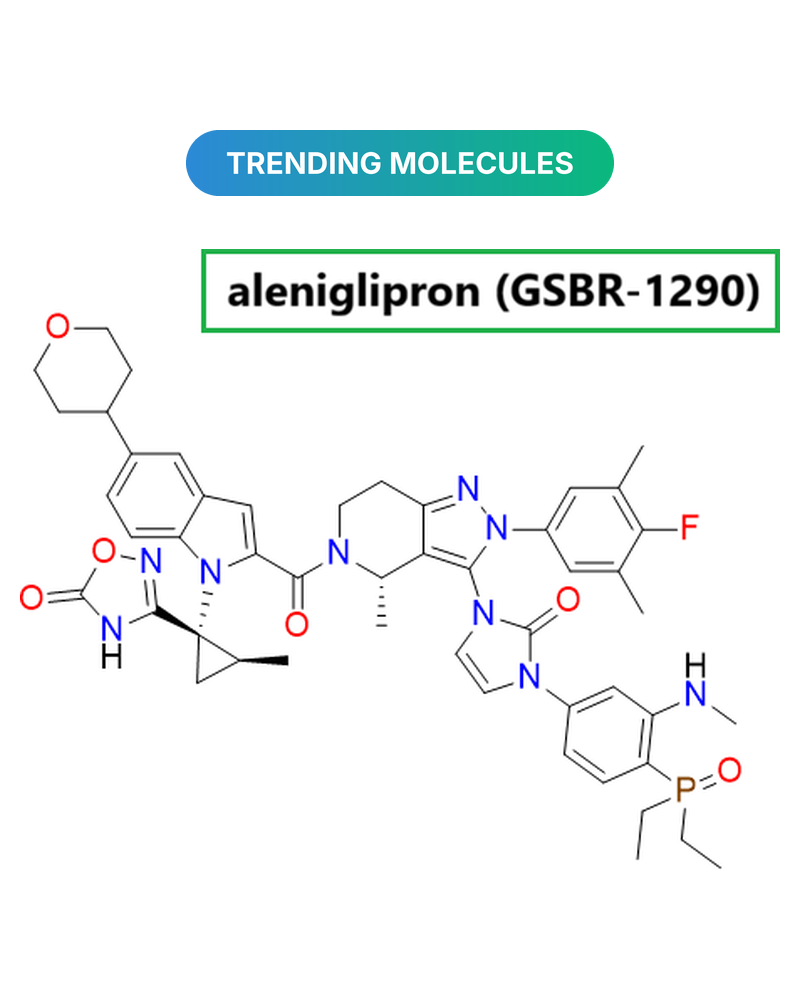
Aleniglipron (GSBR-1290) Synthesis: AI Retrosynthesis Route Analysis and Reaction Risk Assessment with ChemAIRS®
Explore how ChemAIRS® AI retrosynthesis software analyzes the synthesis of aleniglipron (GSBR-1290), comparing a 21-step patent route with a proposed 15-step alternative. Discover how AI-powered synthetic route planning can identify shorter pathways, evaluate reaction risks, and support more informed decisions in medicinal and process chemistry.

ChemAIRS® vs SYNTHIA®
Compare ChemAIRS® and SYNTHIA® for retrosynthesis: rule-based vs machine learning approaches, use cases by role, and how to choose the right fit.

ChemAIRS® vs Reaxys® vs SYNTHIA®
Compare ChemAIRS®, Reaxys®, and SYNTHIA® for computer-aided synthesis planning: what each tool does, where they overlap, and how to choose.

Oveporexton (TAK-861) Synthesis: A ChemAIRS® Retrosynthetic Analysis
Retrosynthetic analysis of oveporexton (TAK-861), the first-in-class OX2R agonist for narcolepsy type 1, now under FDA Priority Review, planned with ChemAIRS®.

Synthesis of Vepdegestrant (ARV-471): ChemAIRS® Route Design for the First Approved PROTAC
Synthesis of vepdegestrant (ARV-471): ChemAIRS® retrosynthetic analysis of the first FDA-approved PROTAC degrader for ESR1-mutated breast cancer.

Daraxonrasib (RMC-6236) Synthesis: ChemAIRS® Retrosynthesis of an FDA-Approved RAS(ON) Inhibitor
Synthesis of daraxonrasib (RMC-6236): ChemAIRS® proposes discovery and process routes for the RAS(ON) inhibitor now under FDA review.

Zidesamtinib (NVL-520, Jideytro): ChemAIRS® Retrosynthetic Analysis of a TRK-Sparing ROS1 Inhibitor
Zidesamtinib (NVL-520) is a macrocyclic ROS1 inhibitor that presents an interesting retrosynthetic challenge. Explore two proposed synthetic routes using ChemAIRS®, comparing fragment assembly, stereocenter formation, macrocyclization strategy, and route length.

Integrating Human Insight with AI: Retrosynthetic Exploration of Surzetoclax (ABBV-453)
Using ChemAIRS, we explored synthetic pathways to AbbVie’s Surzetoclax (ABBV-453), a highly complex, next-generation BCL-2 inhibitor weighing nearly 1000 Da with multiple fused tricyclic and macrocyclic rings. In High-Risk Retrosynthesis mode, ChemAIRS showcased its ability to navigate this molecular complexity. Guided by human insight, the AI-driven retrosynthesis platform delivered a streamlined, convergent, and experimentally executable synthesis, highlighting the power of human-AI collaboration in modern drug discovery.