
Oveporexton (TAK-861): A First-in-Class Orexin Agonist for Narcolepsy Type 1 and Its ChemAIRS® Retrosynthesis
Oveporexton (TAK-861) Confirmed as the First Orexin Agonist for Narcolepsy Type 1
On August 5, 2026, the U.S. Food and Drug Administration approved oveporexton (TAK-861), making it the first orexin receptor agonist approved for narcolepsy type 1 (NT1) and adults.¹ It’s also the first therapy to treat the disorder by restoring the neurochemical signal it destroys rather than blunting the symptoms downstream.
Why Narcolepsy Type 1 Calls for an Orexin Agonist
An orally active, selective OX2R agonist has been a long-standing goal for drug hunters working on narcolepsy, and oveporexton is the refined successor to the compound that first showed the goal was reachable (Figure 1). Firazorexton (TAK-994), the first oral OX2R agonist, nearly abolished cataplexy and restored wakefulness in Phase 2, but its development was halted in October 2021 after dose-dependent hepatotoxicity.²⁻³

Figure 1 Chemical structure of oveporexton (TAK-861) and its related predecessor, firazorexton (TAK-994)
Oveporexton keeps the [3-(3,5-difluorophenyl)-2-fluorophenyl]methyl group and the 2-hydroxy-2-methylpropanoyl cap of firazorexton, but adds a 4,4-difluoro substitution to the pyrrolidine ring and replaces the methanesulfonamide with an ethanesulfonamide.²⁻⁴ The redesign yields a highly selective OX2R agonist (EC₅₀ ≈ 2.5 nM, roughly 3000-fold over OX1) potent enough to be given at 1 to 2 mg twice daily, far below firazorexton's clinical dose of 30 to 60 mg twice daily, and it advanced through Phase 3 without the hepatic signal that ended its predecessor.³⁻⁷
That compact, fluorine-rich pyrrolidine sulfonamide, with two contiguous stereocenters, a gem-difluoro center, and a 2-fluorinated biaryl, is the target the following ChemAIRS® analysis takes apart.
ChemAIRS® Retrosynthetic Analysis of Oveporexton (TAK-861)
ChemAIRS® returned several viable routes to oveporexton, spanning a fully precedented linear sequence and a much more convergent alternative.
The precedented route runs 14 linear steps and closely mirrors the chemistry disclosed in Takeda's patent;⁸ it is well supported but long (Scheme 1). Beginning from the commercially available phenylalanine derivative 1b (the product of step 3 in the reported route), the target is assembled gradually through a combination of C–X bond-forming reactions, including a Reformatsky reaction (transformation of 4b to 5a) to introduce the gem-difluoride of the pyrrolidine core and a late-stage Suzuki cross coupling to prepare 13a, protecting group manipulations, and functional group interconversions.

Scheme 1 A recapitulated 14-step route to oveporexton (TAK-861) prepared by ChemAIRS®
The convergent route reaches the same target in eight steps, with a longest linear sequence (LLS) of five, by assembling two fragments (namely the fluorinated biphenyl and the difluoropyrrolidine) in parallel and uniting them late (Scheme 2).
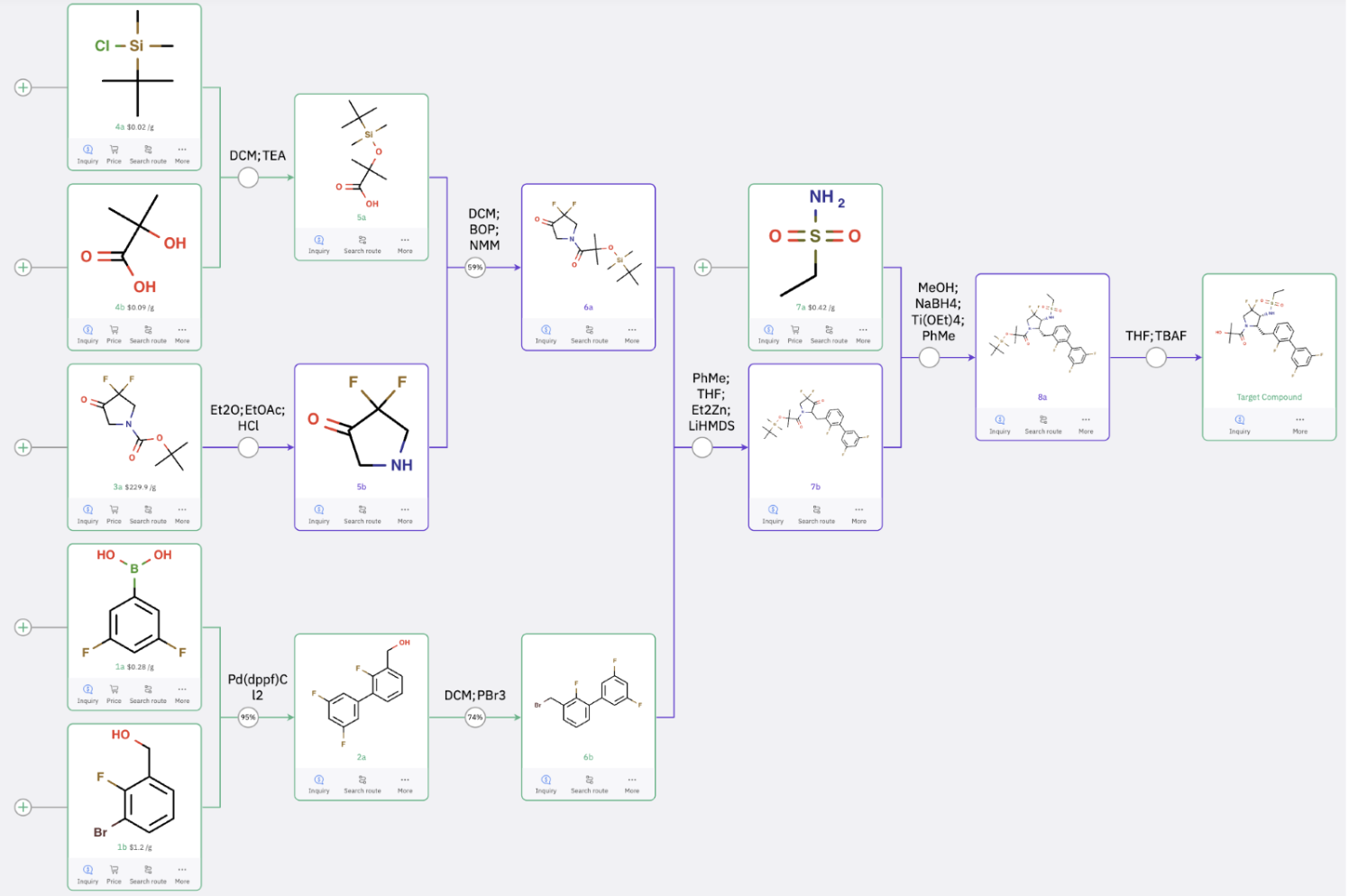
Scheme 2 A convergent ChemAIRS®-inspired route to oveporexton (TAK-861)
On the biaryl side, a Suzuki cross-coupling between boronic acid 1a and aryl bromide 1b forges the biaryl bond, and the resulting benzylic alcohol 2a can be converted to benzylic bromide 6b. On the heterocycle side, the Boc group of the commercially available pyrrolidinone 3a is removed under acidic conditions to give 5b, which could then be joined to the TBS-protected acid 5a via amide coupling to install the 2-hydroxy-2-methylpropanoyl cap as 6a.
The amide coupling affording 6a is the first step where a supporting module changes the plan. ChemAIRS® initially proposed BOP as the coupling agent (see Scheme 2), which produces stoichiometric quantities of the suspected carcinogen HMPA as a byproduct. The Condition Search module returns several less hazardous alternatives for this transformation, among them HATU, TBTU, and T3P, any of which could plausibly replace BOP under suitable conditions. Designing BOP out at this stage matters: replacing it removes a scale-up liability at the planning stage rather than in development.
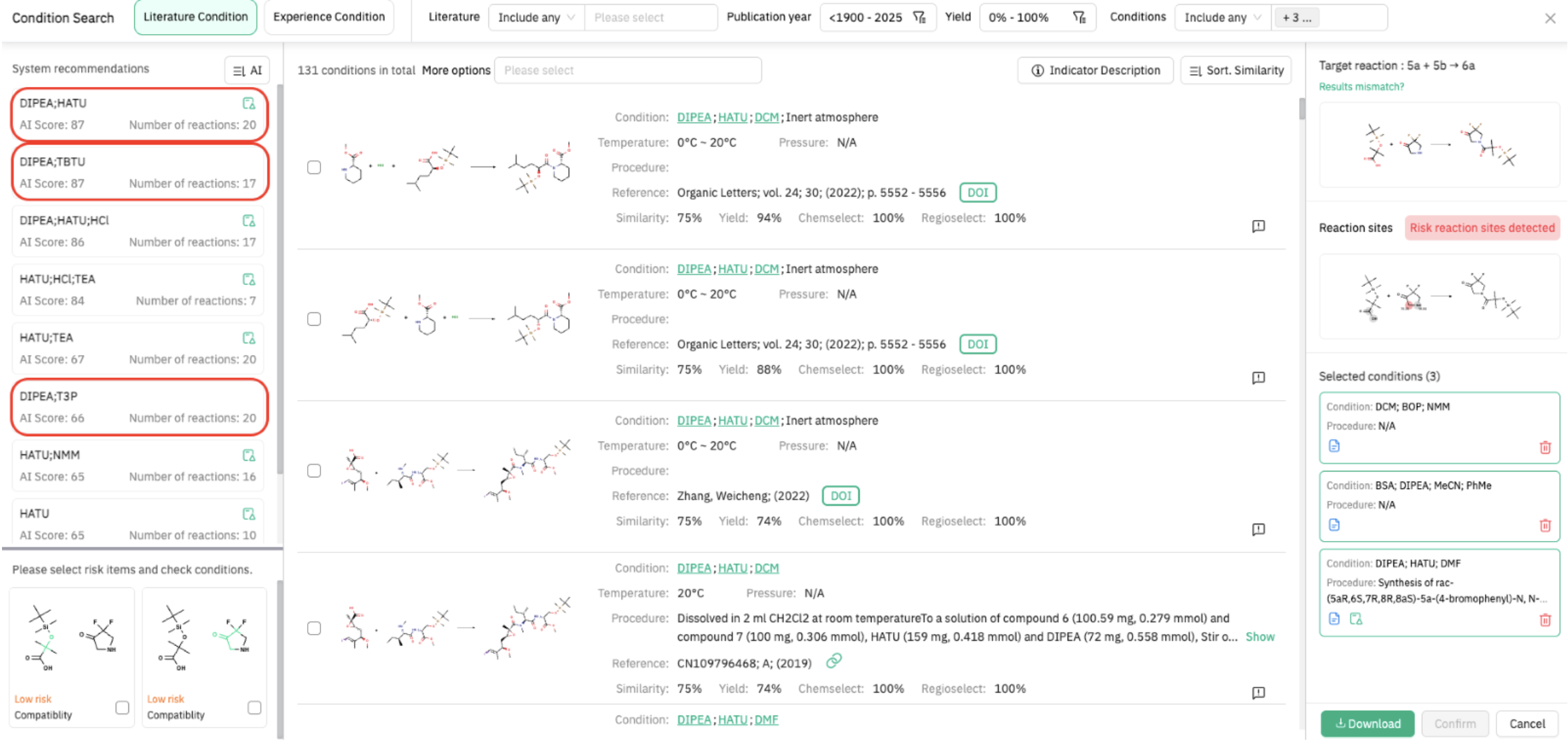
Figure 2 Results of a Condition Search for amide coupling of 5a and 5b
To unite the two fragments, ChemAIRS® proposed a less obvious disconnection. A deprotonative zincation of 6a⁹ and trapping the resulting nucleophile with benzylic bromide 6b could assemble the majority of the oveporexton scaffold as 7b. The C3 sulfonamide could then be installed by titanium-mediated reductive amination of the pyrrolidinone with ethanesulfonamide 7a, following which, in a similar manner to the reported synthesis, chiral resolution could presumably deliver the required (2S,3R) enantiomer of 8a. Removal of the TBS group under standard conditions could then afford oveporexton.
What Is ChemAIRS®?
ChemAIRS® is a computer-aided synthesis planning (CASP) platform that proposes retrosynthetic routes to existing and novel molecules, ranking them by feasibility and by access to readily available building blocks. Its Retrosynthesis module combines machine learning with encoded chemical logic, and every step remains open to interrogation, so chemists can troubleshoot a disconnection or explore alternative methodology rather than accept a route as given. The platform is built to extend a chemist's strategic reach, not to substitute for it.
ChemAIRS®-Inspired Synthesis of Oveporexton (TAK-861): From a 14-Step Linear Route to a More Convergent Alternative
The headline result is a convergent route that reaches oveporexton in eight steps with a longest linear sequence of five, set against a fully precedented linear sequence of 14 steps. ChemAIRS® produced both: the precedented route for confidence, and the convergent one by disconnecting the scaffold into two fragments, the biaryl benzylic bromide 6b and the acylated 4,4-difluoropyrrolidinone 6a, then uniting them late through a deprotonative zincation and benzylation. Convergence is what makes a long medicinal-chemistry sequence workable at scale: the fragments are built in parallel, the critical path is shorter, and the late union could be a natural point to diversify if analogs are wanted. Using the Condition Search tool within the same user interface allows for potentially hazardous reagents to be flagged and replaced early in the design phase, before investing time and materials.
The value ChemAIRS® adds is in the strategy it makes visible: where to cut the molecule, and how to design for convergence with readily available building blocks.
References
FDA Approves First Drug to Treat the Full Range of Narcolepsy Type 1 Symptoms. U.S. Food and Drug Administration. August 5, 2026. Accessed August 7, 2026. https://www.fda.gov/news-events/press-announcements/fda-approves-first-drug-treat-full-range-narcolepsy-type-1-symptoms
Kukkonen JP, Jacobson LH, Hoyer D, Rinne MK, Borgland SL. International Union of Basic and Clinical Pharmacology CXIV: orexin receptor function, nomenclature and pharmacology. Pharmacol Rev. 2024;76(5):625–688. https://doi.org/10.1124/pharmrev.123.000953
Arif Z, Siddiqui E, Hujjat SFZ, Khan MS, Mauhmoud A. Orexin receptor 2 agonists: a pathophysiologic approach to narcolepsy type 1. Ann Med Surg. 2026;88:42–44. https://doi.org/10.1097/MS9.0000000000004476
Mitsukawa K, Terada M, Yamada R, et al. TAK-861, a potent, orally available orexin receptor 2-selective agonist, produces wakefulness in monkeys and improves narcolepsy-like phenotypes in mouse models. Sci Rep. 2024;14(1):20838. https://doi.org/10.1038/s41598-024-70594-1
Takeda Pharmaceutical Company Limited. Takeda announces positive results from two pivotal Phase 3 studies of oveporexton (TAK-861) in narcolepsy type 1. July 14, 2025. Accessed August 4, 2026. https://www.takeda.com/newsroom/newsreleases/2025/positive-results-phase-3-oveporexton-narcolepsy-type-1/
A study of TAK-861 for the treatment of narcolepsy type 1. ClinicalTrials.gov identifier: NCT06470828. Accessed August 4, 2026. https://clinicaltrials.gov/study/NCT06470828
A study of TAK-861 in people with narcolepsy type 1. ClinicalTrials.gov identifier: NCT06505031. Accessed August 4, 2026. https://clinicaltrials.gov/study/NCT06505031
Hattori Y, Miyanohana Y, Kajita Y, et al., inventors; Takeda Pharmaceutical Company Limited, assignee. Heterocyclic Compound and Use Thereof. US patent 2020/0247747 A1. August 6, 2020.
Lefker B, Gibson K, Spendiff M, et al., inventors; Orexia Therapeutics Limited, applicant. Bicyclic-Heterocycle Derivatives and Their Uses as Orexin-2 Receptor Agonists. WIPO Patent WO2022/051596 A1. March 10, 2022.