
Camizestrant Synthesis: Key Findings
Discovery route reconstruction: ChemAIRS reconstructed the six-step linear discovery route reported by AstraZeneca (J. Med. Chem. 2020, 63, 14530–14559), including the key Pictet–Spengler cyclization and Buchwald–Hartwig amination used to construct the tricyclic core and complete the synthesis.
Alternative route to indazole-substituted ethanamine intermediate: The intermediate was identified as a key compound preceding the Pictet–Spengler cyclization. ChemAIRS proposed alternative strategies for its preparation, including a green process chemistry approach and a literature-reported route based on Ellman sulfinamide chemistry.
Process chemistry insights: ChemAIRS highlighted large-scale-available raw materials and explicitly labeling the enzymatic step to help process chemists assess sourcing options and recognize biocatalysis opportunities in process design or green chemistry strategy.
Camizestrant (AZD9833): An Oral Selective Estrogen Receptor Degrader for ER+ Breast Cancer
Camizestrant (AZD9833; brand name Etcamah; C₂₄H₂₈F₄N₆; MW 476.5) is an oral selective estrogen receptor degrader (SERD) and full ERα antagonist developed by AstraZeneca for estrogen receptor-positive (ER+), HER2-negative breast cancer. It binds to ERα and promotes its degradation, providing a treatment option for patients with acquired ESR1 mutations associated with endocrine therapy resistance.
In September 2026, the US FDA granted accelerated approval to camizestrant in combination with a CDK4/6 inhibitor for HR-positive, HER2-negative advanced breast cancer with emerging ESR1 mutations following first-line endocrine therapy, based on the Phase III SERENA-6 trial (Targeted Oncology, September 6, 2026). The European Commission approved the same combination in July 2026 (OncLive, July 23, 2026).
Clinical results have varied across treatment settings. The Phase III SERENA-4 trial did not demonstrate a statistically significant progression-free survival (PFS) benefit for camizestrant plus palbociclib over anastrozole plus palbociclib in first-line advanced breast cancer (OncLive, September 11, 2026). Meanwhile, CAMBRIA-1 and CAMBRIA-2 are evaluating camizestrant in earlier-stage breast cancer, including adjuvant treatment to reduce recurrence risk (AstraZeneca, 2026).
Chemical structure of camizestrant (AZD9833).
Camizestrant Synthesis and Retrosynthetic Analysis: A ChemAIRS® Case Study
From a synthetic chemistry perspective, camizestrant is a valuable target for retrosynthetic analysis, featuring a stereochemically defined tetrahydropyrazoloisoquinoline scaffold and multiple nitrogen-containing heterocycles. Its discovery synthesis was reported in Journal of Medicinal Chemistry (2020, 63, 14530–14559). In this case study, ChemAIRS® was used to (i) reconstruct the reported synthetic route and (ii) explore alternative disconnections for the key chiral amine intermediate, focusing on different strategies for stereocentre construction, including auxiliary-controlled asymmetric synthesis and biocatalytic amination.
Camizestrant (AZD9833) Discovery Route
The synthetic route generated by ChemAIRS is consistent with the synthetic strategy reported by the AstraZeneca team in the Journal of Medicinal Chemistry (2020, 63(23), 14530–14559) (Scheme 1).
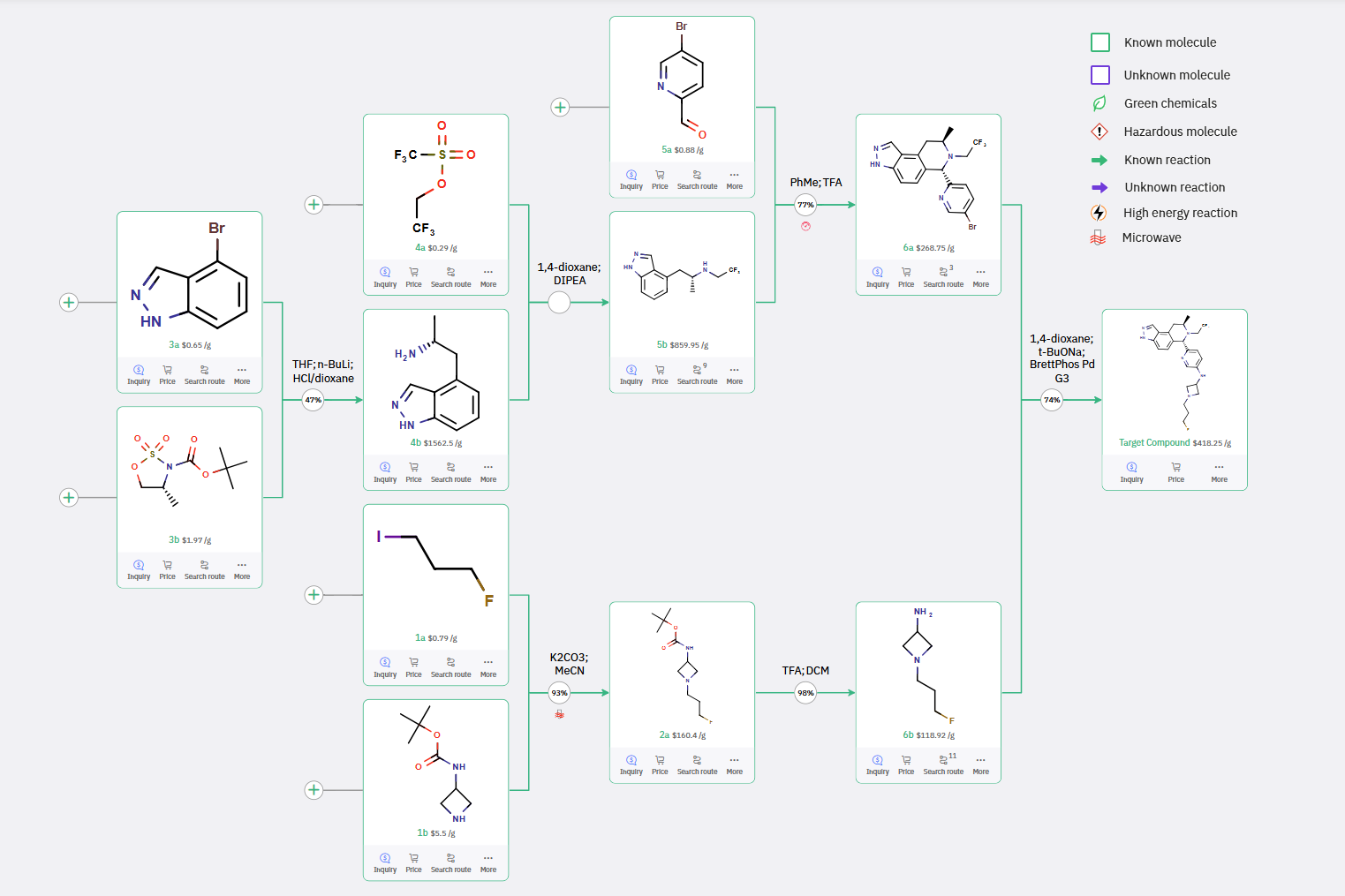
Scheme 1. Discovery route to camizestrant reconstructed in ChemAIRS.
The synthesis begins with brominated indazole 3a and chiral cyclic sulfamidate 3b. Lithium–bromine exchange generates the corresponding aryllithium species, which undergoes nucleophilic ring opening of the sulfamidate. Acidic deprotection then affords amine 4b. An acylation–reduction sequence converts 4b into the N-(2,2,2-trifluoroethyl) indazole intermediate 5b.
The tricyclic indazole 6a is formed by a diastereoselective Pictet–Spengler cyclization of arylethylamine 5b with aldehyde 5a. Buchwald–Hartwig amination of 6a with 1-(3-fluoropropyl)azetidin-3-amine (6b) furnishes camizestrant.
The azetidine building block 6b is prepared from commercially available 3-(Boc-amino)azetidine 1b by N-alkylation with 1-fluoro-3-iodopropane 1a, followed by acidic Boc removal.
In the original report, this sequence gave 15 g of camizestrant in 15% overall yield. The low yield and the scale limit come from the points the later process paper lists: chromatography at most stages, an SFC separation of the undesired cis diastereomer, a sulfamidate and an amine (6b) that are both unstable, and amorphous intermediates that were isolated by concentration to dryness. These findings highlight several areas requiring consideration when translating the discovery synthesis into a scalable manufacturing process.
Literature-Reported Asymmetric Synthesis of Indazole-Substituted Ethanamine: Ellman Sulfinamide Route
R. D. M. Davies et al. (Tetrahedron Letters, 2018, 59, 2917–2920) report a route that starts from 4-bromoindazole. A Stille-type coupling using tributyltin methoxide and isopropenyl acetate gives ketone 2b. Condensation of the ketone with (R)-tert-butanesulfinamide 2a forms the N-sulfinyl imine 3a. Diastereoselective reduction with sodium borohydride gives sulfinamide 4a and sets the configuration at the amine-bearing carbon. Acidic cleavage of the sulfinyl auxiliary, followed by N-alkylation with 2,2,2-trifluoroethyl trifluoromethanesulfonate (CF₃CH₂OTf), affords the indazole-substituted ethanamine as the target intermediate.
Scheme 2. ChemAIRS-generated alternative routes to the indazole-substituted ethanamine, a camizestrant intermediate, featuring Ellman sulfinamide chemistry.
This route replaces the organolithium step and the cyclic sulfamidate of the discovery route with Ellman sulfinamide chemistry, in which the stereochemical outcome is controlled by a crystalline, shelf-stable auxiliary. The cost is a longer sequence to the primary amine (ketone formation, imine formation, reduction and deprotection) and the use of an organotin reagent, whose residues would need to be controlled to low levels in a pharmaceutical intermediate.
A Green Process Chemistry Route to Indazole-Substituted Ethanamine: ω-Transaminase Biocatalysis
Route choice for a large-scale intermediate largely sets the waste, solvent use and safety profile of a process, so ChemAIRS was also used to look for a shorter and more sustainable route to the indazole-substituted ethanamine (Scheme 3).
The proposal replaces the three-step sequence of imine formation, borohydride reduction and sulfinamide cleavage from Scheme 2 with one enzymatic amination. An ω-transaminase converts the prochiral ketone 2a into the chiral primary amine 3b in aqueous media, and N-alkylation with CF₃CH₂OTf then gives the target intermediate. The target amine is the (R)-enantiomer, so an (R)-selective transaminase would be required.
Scheme 3. ChemAIRS®-proposed enzymatic transamination route (ω-transaminase) to the indazole-substituted ethanamine, labeling large-sized packaging for scale-up synthesis and enzymatic catalysis reaction
In addition to identifying the proposed biocatalytic transformation, ChemAIRS provides information relevant to process-route evaluation.
Raw materials available in large-scale quantities are highlighted in the route, helping chemists identify commercially available materials that may be suitable for bulk procurement at an early stage of process development.
The enzymatic step is also explicitly labelled as an enzyme-catalysed reaction, making it easier to recognize routes involving specialized reaction types.
Together, these features can help process chemists assess raw-material sourcing options and identify opportunities to consider biocatalysis as part of a process design or green chemistry strategy.
Comparison of Reaction Types for Chiral Amine Synthesis
The three approaches to indazole-substituted ethanamine intermediate involve different strategies for establishing the stereogenic carbon bearing the primary amine. Their main reaction characteristics and process considerations are summarized below.
| Parameter | Organolithium + cyclic sulfamidate (discovery route) | Ellman sulfinamide (literature) | ω-Transaminase (ChemAIRS proposal) |
|---|---|---|---|
| Key reaction type | C–C bond formation by ring opening | Diastereoselective imine reduction | Biocatalytic asymmetric amination |
| Source of chirality | Chiral cyclic sulfamidate | (R)-tert-Butanesulfinamide | Enzyme |
| Key conditions | n-BuLi, THF, –78 °C | Stille-type coupling, NaBH4 reduction | DMSO, phosphate buffer, D-alanine, ammonium formate, formate dehydrogenase |
| Steps to the primary amine | 2 | 4 | 2 |
| Points to check | Cryogenic step, unstable sulfamidate, side reactions of the aryllithium | Organotin residues, diastereoselectivity of the reduction | Enzyme availability, selectivity and conversion on the indazole substrate |
Key differences:
The discovery route uses nucleophilic ring opening, the Ellman route relies on auxiliary-controlled reduction, and the biocatalytic route uses enzyme-mediated transfer of an amino group to a prochiral ketone.
The organolithium route requires cryogenic conditions; the Ellman route uses a stoichiometric chiral auxiliary and reducing agent; the enzymatic route reduces stereochemistry-forming operations but adds substrate-specific enzyme requirements.
Route selection depends on experimental performance: yield, enantiomeric purity, impurity profile, reproducibility, and scalability.
ChemAIRS-Assisted Retrosynthetic Analysis of Camizestrant and Its Key Intermediates
ChemAIRS® was used to reconstruct the reported synthesis of camizestrant and to explore alternative strategies for the key chiral amine intermediate 5b. Besides the discovery route and the Ellman sulfinamide approach, the analysis identified ω-transaminase-mediated asymmetric amination as a potential biocatalytic alternative. ChemAIRS also flagged large-scale raw material availability and identified the enzymatic reaction type, which is useful for process-route evaluation and raw material sourcing.
An algorithm-generated route is a candidate and not a validated procedure. The proposed biocatalytic route has not been validated experimentally, and yield, selectivity, reproducibility and scalability need to be confirmed in the laboratory. These alternatives provide options for route scouting and early process development.
Camizestrant Synthesis FAQ
1. What is the reported discovery synthesis of camizestrant?
The discovery synthesis reported by AstraZeneca involves a six-step linear sequence from 4-bromoindazole. Key transformations include aryllithium-mediated opening of a chiral cyclic sulfamidate, N-functionalization, diastereoselective Pictet–Spengler cyclization and final Buchwald–Hartwig amination. The reported synthesis delivered 15 g of camizestrant in 15% overall yield.
2. What is the key intermediate in the retrosynthetic analysis of camizestrant?
The indazole-substituted ethanamine is a key intermediate preceding the Pictet–Spengler cyclization. It contains the C8 stereocentre required in the final camizestrant structure.
3. What reaction types can be used to establish the stereocentre of indazole-substituted ethanamine intermediate?
Three approaches are considered: nucleophilic ring opening of a chiral cyclic sulfamidate using an aryllithium species, Ellman sulfinamide-mediated diastereoselective imine reduction, and ω-transaminase-mediated asymmetric amination of a prochiral ketone.
4. What is the difference between the Ellman sulfinamide route and the enzymatic route?
The Ellman route establishes stereochemistry through diastereoselective reduction of an N-sulfinyl imine, followed by removal of the chiral auxiliary. The proposed enzymatic route uses an ω-transaminase to convert a prochiral ketone directly into the chiral primary amine. The latter replaces the imine formation, reduction and auxiliary cleavage sequence with a single enzymatic transformation.
5. Has the proposed enzymatic route to indazole-substituted ethanamine intermediate been experimentally validated?
No experimental validation is reported for this proposed route. Enzyme activity, enantioselectivity, substrate compatibility and reaction conditions must be evaluated to determine its feasibility.
6. Is camizestrant approved?
In September 2026, the US FDA granted accelerated approval to camizestrant in combination with a CDK4/6 inhibitor for HR-positive, HER2-negative advanced breast cancer with an emerging ESR1 mutation following first-line endocrine therapy. The European Commission approved the same combination in July 2026.
The routes in this article were analyzed with ChemAIRS® Retrosynthesis and Process Chemistry.
Related reading
References
Scott, J. S.; Moss, T. A.; et al. Discovery of AZD9833, a Potent and Orally Bioavailable Selective Estrogen Receptor Degrader and Antagonist. J. Med. Chem. 2020, 63, 14530–14559. doi:10.1021/acs.jmedchem.0c01163
Tatton, M. R.; Currie, G. S.; et al. First Multikilogram Synthesis of the Next-Generation Oral Selective ERα Degrader Camizestrant. Org. Process Res. Dev. 2024, 28, 2334–2342. doi:10.1021/acs.oprd.4c00135
Davies, R. D. M.; Pink, J. H.; Scott, J. S.; Bailey, A. Synthesis of 8-substituted-6-phenyl-6,7,8,9-tetrahydro-3H-pyrazolo[4,3-f]isoquinolines using Pictet–Spengler and Bischler–Napieralski cyclisation methods. Tetrahedron Lett. 2018, 59, 2917–2920.
Savile, C. K.; Janey, J. M.; Mundorff, E. C.; et al. Biocatalytic Asymmetric Synthesis of Chiral Amines from Ketones Applied to Sitagliptin Manufacture. Science 2010, 329, 305–309. doi:10.1126/science.1188934
Sheldon, R. A.; Woodley, J. M. Role of Biocatalysis in Sustainable Chemistry. Chem. Rev. 2018, 118, 801–838. doi:10.1021/acs.chemrev.7b00203
Anastas, P. T.; Warner, J. C. Green Chemistry: Theory and Practice; Oxford University Press: New York, 1998.
Grunwald, P., Ed. Pharmaceutical Biocatalysis; 2019 (chapter on biocatalyzed synthesis of antidiabetic drugs; summary of the sitagliptin process).
Targeted Oncology. FDA Approves Camizestrant Plus CDK4/6 Inhibitor for ESR1-Mutant Breast Cancer (September 6, 2026).
OncLive. European Commission Approves Camizestrant Plus CDK4/6 Inhibition for Emergent ESR1-Mutated Advanced Breast Cancer (July 23, 2026).
OncLive. SERENA-4 Misses Primary PFS End Point With Camizestrant Plus Palbociclib (September 11, 2026).